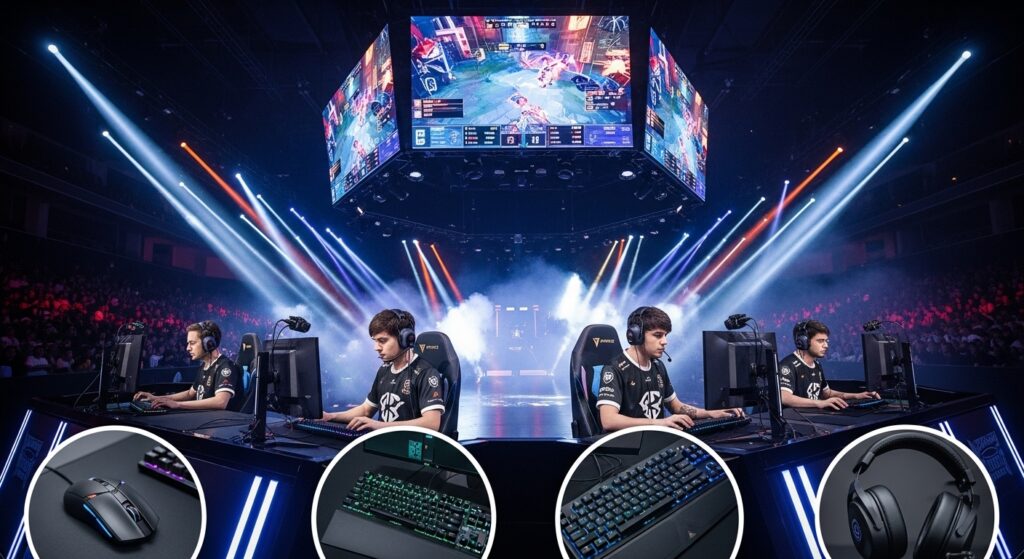
Esports, a term that was once confined to a small group of enthusiasts, has grown into a global phenomenon with millions of fans and players around the world. The competitive gaming industry is now a multi-billion-dollar business, with professional players, teams, sponsors, and tournaments. But how did esports get to where it is today? In this blog post, we will explore the history, growth, and impact of esports on the gaming industry, culture, and society as a whole.
The Early Days of Competitive Gaming
Esports, or electronic sports, refers to competitive gaming at a professional level, where individuals or teams compete in organized video game tournaments. While competitive gaming might seem like a relatively modern concept, it has roots that date back to the early days of video games in the 1970s and 1980s.
One of the earliest examples of competitive gaming can be traced back to 1972 when Stanford University hosted the first-ever video game competition for the game Spacewar!, a popular arcade game at the time. This tournament, called the “Spacewar Olympics,” saw students from different universities compete against each other for the title of best Spacewar! player.
While this competition was more of a novelty than a formal esports event, it set the stage for the future of competitive gaming. In the decades that followed, gaming evolved, and as technology advanced, so did the opportunities for players to compete against each other in new ways.
The Rise of LAN Tournaments in the 1990s
The 1990s saw the introduction of Local Area Network (LAN) gaming, a significant milestone in the growth of esports. LAN gaming allowed players to connect their computers to a local network and compete against each other in real-time, without the need for an internet connection. This development played a pivotal role in shaping competitive gaming as we know it today.
In 1997, the first major esports tournament, Red Annihilation, was held for the game Quake, a popular first-person shooter developed by id Software. This event is considered by many to be the birth of modern esports. The tournament attracted hundreds of players, and the winner, Dennis “Thresh” Fong, became the first true esports celebrity, taking home a Ferrari as part of his prize.
By the late 1990s and early 2000s, LAN tournaments began to proliferate. Titles like StarCraft, Warcraft III, Counter-Strike, and Quake became staples in competitive gaming, with events like the World Cyber Games and The Electronic Sports World Cup drawing large crowds and media attention. These events helped to solidify the idea of esports as a serious form of competition, paving the way for the massive growth that would follow.
The Digital Revolution and the Birth of Online Esports
In the early 2000s, broadband internet became more widely available, and gaming began to shift from LAN parties to online competitions. This shift was crucial in expanding the reach of esports to a global audience. Players no longer needed to be in the same physical location to compete, and tournaments could be broadcast to viewers across the world.
One of the key milestones in this evolution was the release of World of Warcraft in 2004. The game introduced a new wave of competitive online gaming through its player-vs-player (PvP) modes and large-scale raids. It also introduced esports concepts such as ranked play and organized tournaments, which helped solidify the idea of esports as a professional sport.
At the same time, the Counter-Strike series continued to grow in popularity, and the launch of League of Legends in 2009 provided an entirely new genre for esports to thrive in. League of Legends quickly became one of the most successful competitive games, with its vibrant esports scene providing a blueprint for how a game could foster a dedicated, professional competitive community.
The Explosion of Esports in the 2010s
The 2010s were a defining decade for esports. It was during this time that esports truly began to enter the mainstream, with professional leagues, sponsorships, and media coverage reaching new heights.
One of the most significant moments in the history of esports came in 2011, with the launch of the League of Legends World Championship. This tournament attracted millions of viewers and marked the beginning of esports as a global spectacle. The League of Legends World Championship quickly became the largest and most prestigious event in the esports calendar, and its success helped establish esports as a legitimate form of entertainment on par with traditional sports.
In the same period, other games like Dota 2, Counter-Strike: Global Offensive, Overwatch, and Hearthstone started to see massive competitive scenes, each with their own tournaments and leagues. The rise of game streaming platforms like Twitch also played a crucial role in the growth of esports. Twitch allowed gamers to broadcast their gameplay live, providing a platform for both casual players and professional gamers to build massive audiences and engage with fans.
Esports organizations, such as Cloud9, Team Liquid, and Fnatic, started to build massive followings, and major brands, including Red Bull, Coca-Cola, and Intel, began to invest heavily in sponsorships and partnerships. The sheer size and scale of esports events grew exponentially, with prize pools reaching millions of dollars, the most notable being The International for Dota 2, which has consistently offered one of the largest prize pools in the history of competitive gaming.
The Professionalization of Esports
As esports continued to grow, the industry began to professionalize. Teams and players started to receive salaries, and sponsorship deals became more common. Esports organizations hired dedicated coaches, analysts, and managers to help their teams improve and succeed in competition. Training regimens for players became more structured, with players practicing for hours every day, refining their skills, and studying their opponents.
In addition to the rise of professional teams and players, the competitive gaming industry also saw the creation of esports leagues and governing bodies. The Overwatch League, launched in 2018, was one of the first major esports leagues to adopt a city-based franchise model, similar to traditional sports leagues like the NFL or NBA. This model provided stability to teams and allowed cities to develop their own esports identities, helping to further integrate esports into mainstream culture.
Other leagues, such as the League of Legends Pro League (LPL) and Counter-Strike: Global Offensive’s ESL Pro League, also began to gain prominence. These leagues introduced regular seasons, playoff systems, and finals events, which are now commonplace in the structure of esports competitions.
Esports and Its Impact on Culture and Society
The rise of esports has had a profound impact on popular culture. As competitive gaming gained in popularity, it started to be seen not just as a pastime but as a legitimate form of entertainment. The growth of esports has attracted millions of viewers who tune in to watch professional players and teams battle it out in some of the most popular games in the world.
In many ways, esports has helped to shape the broader gaming culture, encouraging the development of a global community of fans, players, streamers, and content creators. Platforms like YouTube and Twitch have allowed gamers to share their experiences with a wider audience, and live-streamed events have made it possible for anyone with an internet connection to watch the world’s best players compete in real time.
The cultural influence of esports can also be seen in mainstream media, with major news outlets covering esports events and the growth of professional gaming as a legitimate career path. Many universities have also begun offering scholarships for esports players, and some schools have even created dedicated esports programs and facilities to support the next generation of competitive gamers.
The Future of Esports
As esports continues to evolve, its future seems incredibly bright. The rise of virtual reality (VR) and augmented reality (AR) technologies could bring new opportunities for immersive competitive gaming experiences, allowing players to compete in entirely new ways. Furthermore, as internet speeds continue to improve and cloud gaming becomes more accessible, esports will become even more global and inclusive, allowing players from all corners of the world to participate in tournaments.
Esports is also likely to continue its integration with traditional sports. We are already seeing this in the form of sponsorship deals, television broadcasts, and even esports arenas being built to host large-scale tournaments. The merging of esports and traditional sports could lead to a more hybrid form of entertainment, attracting a wider audience and further cementing esports as a mainstream phenomenon.
Conclusion
The growth of esports over the past few decades has been nothing short of extraordinary. From humble beginnings as a niche hobby, it has transformed into a global industry with professional players, dedicated fans, and major financial investments. Esports has reshaped how we think about gaming and has established itself as a legitimate form of entertainment, rivaling traditional sports in many ways.
Looking to the future, esports is poised to continue its rapid growth and integration into mainstream culture. As technology evolves and the global gaming community expands, the impact of esports will only become more profound. Whether you are a casual player, a competitive gamer, or simply a fan, it’s clear that esports is here to stay—and it’s only going to get bigger from here.