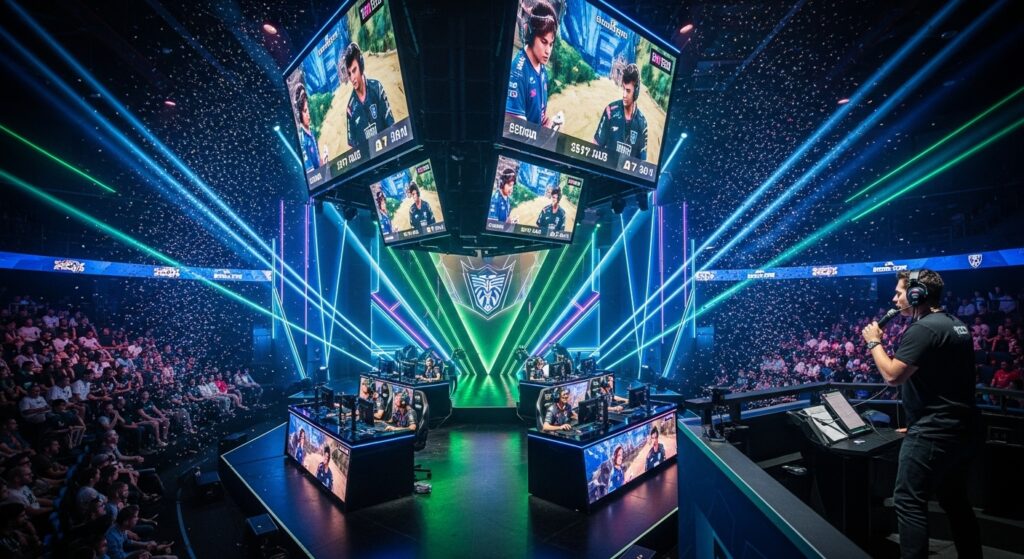
Introduction: The Unstoppable Rise of Esports
Esports, short for electronic sports, has emerged as one of the most dynamic and rapidly growing industries in the world. What began as a hobby for passionate gamers has now become a multi-billion dollar global phenomenon, attracting millions of fans, millions of dollars in sponsorships, and thousands of professional players worldwide. From small-scale local tournaments to massive global events streamed by millions, esports has not only transformed the world of competitive gaming but has also reshaped the landscape of entertainment itself. So how did we get here, and where is esports headed in the future? This post explores the evolution of esports, its impact on culture, the rise of professional gaming, and what we can expect from this digital revolution.
The Origins of Esports: Humble Beginnings
The roots of esports can be traced back to the early days of video gaming. In the late 1970s and 1980s, video game competitions were held in arcades, where players could challenge each other to beat high scores. However, it wasn’t until the 1990s that the foundation for modern esports was laid. As the internet became more widely accessible, the first online multiplayer games began to emerge. Games like Warcraft, Quake, and StarCraft allowed players from all over the world to compete against each other, sparking the idea of organized competitive gaming. During this time, small tournaments were held, primarily in the gaming community, but they were still relatively informal events, lacking the structure and attention of professional sports.
The early esports scene was grassroots-driven, often organized by passionate fans and players who had a desire to compete on a larger scale. With the advent of more sophisticated games and online platforms, like Battle.net (created by Blizzard Entertainment), online gaming began to attract more players and larger audiences. This laid the groundwork for what would later become an entire industry.
The Birth of Professional Esports: The Early 2000s
In the early 2000s, competitive gaming began to emerge as a legitimate profession. Major gaming tournaments such as the World Cyber Games and DreamHack offered players the opportunity to compete for substantial prize pools, with international recognition and sponsorships following. Around this time, esports organizations like Major League Gaming (MLG) began hosting larger-scale tournaments in games such as Halo and Call of Duty. These events quickly gained traction, attracting significant attention from the media and fans alike.
Esports also began to see the formation of professional teams and player contracts, laying the foundation for the modern esports ecosystem. With games like Counter-Strike and Warcraft III, players began to form professional teams, competing in leagues with full sponsorships and prize pools. As streaming technology improved and platforms like Twitch gained popularity, esports started to reach a broader audience, allowing fans to tune into live events and interact with players and commentators in real-time. The shift to streaming platforms was a game-changer, bringing esports to millions of viewers worldwide, who were eager to follow their favorite players, teams, and games.
The Explosion of Esports: Mainstream Success
By the mid-2010s, esports had entered the mainstream. Major tournaments, such as The International (for Dota 2), the League of Legends World Championship, and the Fortnite World Cup, attracted millions of viewers globally. These events showcased not only the skill of the players but also the growing potential of esports as a major form of entertainment. Prize pools for these tournaments grew exponentially, with The International offering a record-breaking prize pool of over $40 million in 2018. The success of these tournaments highlighted that esports was no longer a niche subculture but a fully-fledged industry with millions of fans and a strong following across the globe.
Esports organizations continued to grow, attracting major sponsors, brands, and investors. Companies like Intel, Coca-Cola, and Red Bull began sponsoring esports events, teams, and players, recognizing the potential of this fast-growing industry. The rise of esports betting also began to take hold, with fans placing wagers on tournaments and players, further fueling the industry’s expansion.
The introduction of new titles, such as Overwatch, PUBG, Fortnite, and Valorant, also helped diversify the esports ecosystem. These games brought fresh excitement and new fanbases into the world of competitive gaming, with each game creating its own unique competitive scene. The variety of games and tournaments available today ensures that there is something for everyone, from first-person shooters to multiplayer online battle arena (MOBA) games.
The Esports Athlete: Training, Sacrifice, and Dedication
Professional esports players are no different from traditional athletes when it comes to the level of dedication and sacrifice required to succeed. The best players in the world spend countless hours training, practicing, and studying their game mechanics, strategies, and opponents. Much like professional sports teams, esports players have coaches, analysts, and support staff who help them hone their skills and prepare for competition.
Esports training is intense, often involving several hours of gameplay per day, as well as physical and mental conditioning. The constant need to stay at the top of their game requires players to focus on both improving their in-game performance and managing stress, anxiety, and pressure. Mental health and wellness have become increasingly important topics within the esports community, as the constant grind of practice and competition can take a toll on players. Teams and organizations are now focusing more on holistic approaches, providing players with access to sports psychologists, physical trainers, and support systems to ensure they stay healthy and balanced.
The physical aspect of esports is often overlooked, but it’s just as crucial as any other aspect of training. Esports players face repetitive strain injuries from extended gaming sessions, and their posture and eye health also need to be monitored. Players undergo specific exercises to improve their reaction times, hand-eye coordination, and endurance, ensuring they can perform at their best during long competitive events.
The Esports Industry: Sponsors, Investors, and the Business Side
The business of esports is just as exciting and fast-moving as the gameplay itself. With a global fanbase of millions, esports has attracted massive investment from companies looking to get in on the action. Sponsorships from major brands, such as Monster Energy, Toyota, and Samsung, have played a crucial role in the financial growth of esports. These sponsorships help fund tournaments, events, and player salaries, and allow esports organizations to operate on a professional level.
Media rights and streaming platforms are another significant revenue stream for esports. Platforms like Twitch, YouTube Gaming, and Facebook Gaming are not only important for broadcasting esports events but also for providing content creators with a way to monetize their streams through ads, donations, and subscriptions. These platforms have helped professional gamers build large fanbases, which they can then leverage for additional income through sponsorships, merchandise sales, and partnerships.
In addition to traditional sponsors, esports organizations also attract venture capital and private equity investment. Investors recognize that esports is a lucrative business, with potential for long-term growth and global expansion. These investments help teams build their infrastructure, improve facilities, and hire top talent, which in turn drives more viewers and fans. The economic impact of esports continues to grow, with the global esports market projected to surpass $1 billion in revenue by 2024.
Esports as a Global Cultural Phenomenon
One of the most significant aspects of esports is its global appeal. Unlike traditional sports, which can be limited by geographic location and cultural differences, esports is a digital phenomenon that transcends borders. Players and fans from all around the world can connect, communicate, and compete in real-time, regardless of where they are located. Esports has created an inclusive and accessible space for people to come together through their love of gaming.
The growth of esports has also influenced popular culture. Esports stars are now considered celebrities in their own right, with massive followings on social media platforms like Twitter, Instagram, and TikTok. Their influence extends beyond gaming, as they use their platforms to promote brands, products, and even causes. Esports has also found a home in traditional media, with major networks like ESPN and TNT broadcasting esports events to a wider audience. This mainstream recognition has solidified esports as a cultural force that is reshaping entertainment, with millions of viewers tuning in to watch the latest tournaments and follow the stories of their favorite players.
Esports has also started to influence the world of education, with universities and colleges offering scholarships for competitive gaming. Institutions like the University of California, Irvine, and the University of Utah have created esports programs and facilities, recognizing that gaming is no longer just a hobby but a legitimate career path for students.
The Future of Esports: Innovation, Expansion, and Integration
Looking ahead, the future of esports is incredibly promising. The industry is poised for continued growth, with advancements in technology, gaming experiences, and global connectivity driving innovation. Virtual reality (VR) and augmented reality (AR) are expected to play a significant role in the future of esports, offering new, immersive ways for players and fans to experience competitions. Additionally, the increasing popularity of mobile gaming presents new opportunities for esports to reach even larger audiences.
Esports will likely continue to expand into new regions, with countries in Southeast Asia, Latin America, and Africa becoming more involved in competitive gaming. As internet access improves globally, these regions will be able to participate in online tournaments and events, further increasing the reach and inclusivity of esports.
Esports may also continue to blur the lines between traditional sports and digital gaming. With the rise of virtual sports leagues, such as the NBA 2K League and ePremier League, esports is becoming more integrated into the mainstream sports world. This crossover has the potential to bring even more viewers and fans into the esports ecosystem, creating a new wave of competition that spans both physical and digital realms