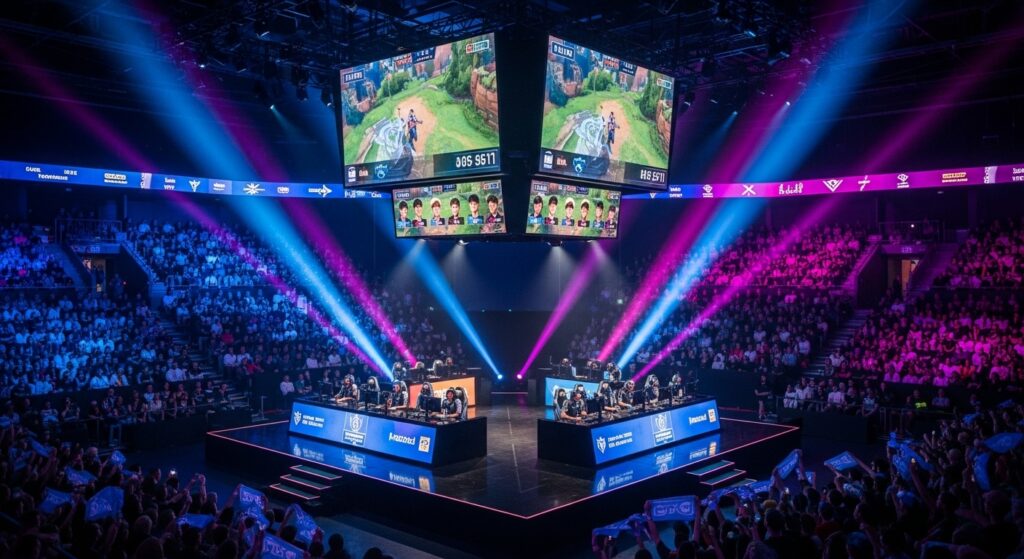
Esports, once a niche activity reserved for a small group of dedicated players, has exploded into a global phenomenon. What was once a hobby for a select few is now a multi-billion-dollar industry that spans continents, cultures, and countless gaming communities. The rise of esports has not only transformed how people play video games but also how they watch them. With millions of viewers, major sponsorships, and a growing professional scene, esports is reshaping the landscape of entertainment. In this post, we’ll explore the factors that have contributed to the rise of esports, its impact on global culture, and the exciting future it holds.
The Origins of Esports: From Hobby to Global Phenomenon
Esports, short for electronic sports, has its roots in the early days of gaming. The first competitive gaming events began in the 1970s, with local tournaments centered around arcade games like Space Invaders. However, it wasn’t until the advent of personal computers and the internet in the 1990s that esports began to gain serious traction. Titles like Quake and StarCraft helped form the foundation of competitive gaming, as players from different parts of the world could now compete in online multiplayer matches.
By the late 1990s and early 2000s, South Korea became a hotspot for esports, where games like StarCraft were televised on national networks. This marked the beginning of esports as a legitimate competitive sport, and the industry began to gain recognition. From humble LAN parties to massive stadiums, esports had already shown its potential for global appeal. What followed was the formation of organized leagues and tournaments, a step that would eventually lead to the professionalization of the sport.
The Growth of Esports Leagues and Tournaments
One of the defining characteristics of modern esports is its organized structure. Similar to traditional sports, esports now features professional leagues and tournaments that take place on a regular schedule. This was a game-changer for the industry, as it allowed teams to establish themselves as contenders, built fanbases, and created a sustainable ecosystem for players, coaches, and analysts.
The development of leagues like The League of Legends Championship Series (LCS), The Overwatch League (OWL), and The ESL Pro League have been instrumental in the growth of esports as a professional sport. These leagues function much like traditional sports leagues, with franchises and teams competing against one another in a structured format. Each league offers players the chance to compete for significant prize money and recognition, further fueling the competitive drive.
Tournaments like The International (Dota 2), The League of Legends World Championship, and The Fortnite World Cup have taken esports to new heights. These events are now major cultural moments, with massive prize pools, top-tier production values, and global viewership. Some of these tournaments attract audiences in the tens of millions, with fans tuning in from all corners of the globe. Esports is no longer a niche pursuit; it has become a spectacle enjoyed by millions of people worldwide.
The Players: From Gamers to Professional Athletes
In the world of esports, players have become celebrities in their own right. Much like athletes in traditional sports, top-tier esports competitors train for hours every day, honing their skills, refining strategies, and building team chemistry. Players are often signed to professional organizations that provide them with financial backing, coaching, and support staff. The rise of streaming platforms like Twitch and YouTube Gaming has allowed players to grow their personal brands and interact directly with their fans.
The path to becoming a professional esports player is no easy feat. Players must possess exceptional skill, deep game knowledge, and the ability to work under intense pressure. In games like League of Legends and Dota 2, players must be in peak mental and physical condition, able to make quick decisions and react to changing circumstances in real-time. This has led to a shift in how we view esports players—no longer seen as just gamers, but as elite athletes who compete in their own unique arena.
Esports has also created new avenues for gamers who might not want to compete at a professional level. There are now careers in coaching, casting (commentating), content creation, and event organization, allowing people to remain involved in the industry without having to be the one behind the keyboard. These careers, while often behind the scenes, are just as crucial to the esports ecosystem.
The Role of Technology: Paving the Way for Esports
Technology has played a vital role in the development of esports, and it continues to be a driving force behind its growth. The development of faster internet speeds, more powerful gaming hardware, and streaming platforms has allowed competitive gaming to thrive. Without high-speed internet, online multiplayer gaming wouldn’t be possible, and without powerful gaming rigs, players wouldn’t have the tools they need to perform at the highest level.
In addition to the basic infrastructure of esports, new technologies are enhancing the viewer experience. Virtual reality (VR) and augmented reality (AR) are already starting to make their mark on esports, offering fans a more immersive way to experience games. Imagine being able to watch a Counter-Strike match from the perspective of a player or seeing a League of Legends battle unfold around you in 360-degree space. As technology continues to improve, esports will only become more accessible and engaging for fans and players alike.
The rise of streaming platforms like Twitch, YouTube Gaming, and Facebook Gaming has also revolutionized how people consume esports content. These platforms allow fans to watch live streams of matches, interact with their favorite players, and even support content creators through donations and subscriptions. The ease of access and interaction has created a sense of community among esports fans, making the experience far more engaging than simply watching a game on television.
Esports and the Global Economy
Esports is not just a hobby or form of entertainment; it is a booming industry with a significant economic impact. In 2023, the global esports market was valued at over $1.5 billion, with projections suggesting continued growth in the years to come. Revenue comes from various sources, including sponsorships, advertising, ticket sales, media rights, and merchandise. Major companies like Coca-Cola, Intel, and Red Bull have jumped on the esports bandwagon, providing sponsorships and supporting events to reach the massive and engaged esports audience.
One of the key factors contributing to the economic success of esports is its ability to attract a young, tech-savvy demographic. Brands are eager to tap into this audience, as they represent the future of consumer spending. Esports’ ability to bring brands and audiences together has made it an attractive investment for companies across multiple industries, from technology to fashion.
The financial rewards for players have also increased significantly. Top esports professionals can earn millions of dollars through tournament winnings, sponsorship deals, and streaming income. This has helped to elevate the status of esports players, making it an attractive career option for young gamers worldwide. In addition to the players, the broader esports ecosystem provides jobs for coaches, analysts, broadcasters, event organizers, and even game developers.
The Cultural Impact of Esports
Esports is more than just a form of entertainment—it is a cultural force that has transformed how people interact with video games. The rise of esports has helped to legitimize gaming as a competitive and socially accepted activity. Gamers who once spent hours alone in their rooms are now celebrated as athletes, receiving the same level of admiration and respect as athletes in traditional sports.
Esports has also fostered a sense of community among players and fans. Unlike traditional sports, esports can be played by anyone with access to a computer or console. This inclusivity has created a diverse global community of gamers who come together to celebrate their shared love of gaming. Whether through watching a tournament, interacting with a streamer, or joining an online team, esports offers opportunities for fans to connect and form lasting relationships.
The growth of esports has also contributed to discussions about diversity and inclusion in the gaming community. Efforts are being made to increase the participation of women, people of color, and other underrepresented groups in competitive gaming. Female players, in particular, have started to make their mark in esports, proving that competitive gaming is a space for everyone.
The Future of Esports: Endless Possibilities
The future of esports is bright, with technology continuing to evolve and new opportunities emerging all the time. As virtual reality, augmented reality, and artificial intelligence continue to progress, we can expect esports to become even more immersive and engaging for players and fans. The possibility of esports becoming a part of the Olympic Games is also on the horizon, with discussions about including competitive gaming in future Olympic events.
Esports will also continue to expand into new regions, particularly in emerging markets. Countries in Asia, Latin America, and Africa are becoming increasingly important players in the global esports scene, and the industry’s growth in these regions will help shape the future of competitive gaming.
The rise of mobile gaming has also opened up new opportunities for esports. Games like PUBG Mobile and Clash Royale have brought esports to mobile devices, allowing players to compete on the go. As mobile gaming continues to grow, esports will likely follow suit, creating new avenues for competition and engagement.
Conclusion: Esports—A New Era of Competitive Entertainment
Esports has come a long way from its humble beginnings. What was once a small and niche community has transformed into a global industry that spans continents, connects millions of fans, and generates billions in revenue. With the rise of professional leagues, celebrity players, and cutting-edge technology, esports has cemented itself as a major force in the world of entertainment.