Introduction: The Global Phenomenon of Esports
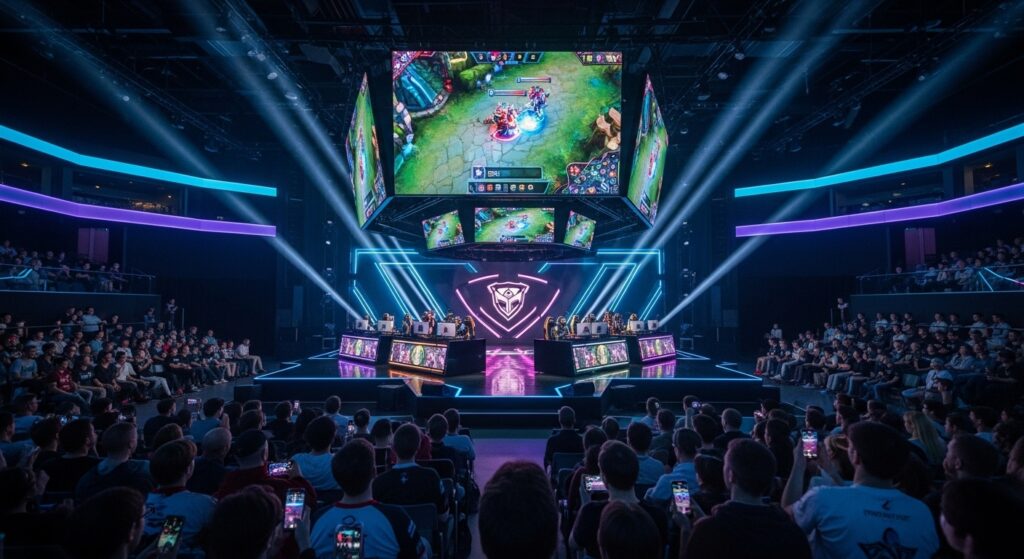
In the last two decades, esports has grown from a niche activity enjoyed by a small community of gamers to a massive global industry worth billions of dollars. What was once a hobby for passionate players has evolved into a mainstream entertainment phenomenon, with millions of fans tuning in to watch professional gamers compete in high-stakes tournaments. Today, esports is more than just gaming—it is a cultural movement, an economic engine, and a bridge between technology and entertainment.
As technology continues to advance and internet access becomes more widespread, esports has become increasingly accessible to audiences around the world. From casual gamers to die-hard fans, esports has captured the attention of people of all ages. This blog post will delve into the evolution of esports, its impact on traditional sports, the role of technology in shaping its future, and the immense potential it holds for both players and fans.
What is Esports?
Esports, or electronic sports, refers to organized, multiplayer video game competitions, particularly between professional players, individually or as teams. The term “esports” encompasses a wide range of video games, from strategy-based games like League of Legends and Dota 2 to first-person shooters like Counter-Strike and Call of Duty. These tournaments attract massive audiences who watch the action unfold in real-time, often via live-streaming platforms like Twitch and YouTube.
Unlike casual gaming, which is primarily about entertainment, esports is highly competitive and involves training, strategy, and teamwork. Players, often referred to as “pro gamers,” dedicate countless hours to mastering their chosen games, developing strategies, and perfecting their skills. Much like traditional sports, esports competitions are often organized into leagues and tournaments, with participants vying for significant cash prizes and sponsorships.
A Brief History of Esports
While the concept of competitive gaming can be traced back to the 1970s, when games like Pong were first played in arcades, esports as we know it today began to take shape in the 1990s. In the early years, competitions were small, regional events that focused on games like Street Fighter and Quake. However, as the internet grew in popularity, competitive gaming began to gain more traction. The first major tournament that could be considered an esports event was the Red Annihilation tournament in 1997, where players competed in Quake. The event was a turning point in esports history, as it attracted more than 2,000 participants and was streamed online for the first time.
In the early 2000s, the rise of broadband internet further fueled the growth of online gaming. StarCraft became one of the first games to popularize competitive gaming on a global scale, particularly in South Korea. The country’s gaming culture, supported by the development of professional gaming leagues, television broadcasts, and the creation of esports-focused television networks, laid the groundwork for the global expansion of esports.
Esports truly entered the mainstream in the mid-2000s, with the advent of major tournaments and sponsorships. Games like Warcraft III, Counter-Strike, and League of Legends began to dominate the esports scene, and organizations started forming dedicated esports teams. The prize pools for major tournaments grew exponentially, and the involvement of large companies, including tech giants and beverage brands, made esports more commercially viable.
The Professionalization of Esports
As esports gained popularity, it began to mirror traditional sports in terms of organization and structure. The creation of professional teams, training facilities, and coaching staff has turned esports into a legitimate career for many players. Just like athletes in traditional sports, esports players undergo rigorous training and must maintain peak performance in order to succeed in tournaments.
The structure of esports leagues also began to resemble traditional sports leagues. Games like League of Legends and Overwatch introduced professional leagues with franchised teams, similar to the structure of major sports leagues such as the NBA or NFL. Players are signed to these teams under contracts, and they receive salaries, bonuses, and sponsorship deals. The competition is fierce, and the stakes are high, with top players earning millions in prize money alone.
Moreover, the growth of esports has led to the rise of many support roles—coaches, analysts, casters (commentators), and even psychologists—demonstrating just how professional the ecosystem has become. Just like in traditional sports, these professionals play a crucial role in helping teams prepare for competition, analyze opponents, and improve overall performance.
The Esports Ecosystem: Tournaments, Leagues, and Streaming
One of the key factors behind the success of esports is its ability to be broadcast to a global audience. Streaming platforms like Twitch, YouTube Gaming, and Facebook Gaming have made it easier for fans to watch live events and follow their favorite players and teams. These platforms also enable real-time interactions between viewers and streamers, creating a sense of community that is central to the esports experience.
Major tournaments such as The International (for Dota 2), the League of Legends World Championship, and the Overwatch League attract millions of viewers worldwide. These events are not just watched by fans in the gaming community but have also gained mainstream attention, with esports competitions being broadcast on traditional TV networks and sports channels.
The prize pools for these tournaments have skyrocketed in recent years. For instance, The International 2021, held by Dota 2, boasted a prize pool of over $40 million, setting a record for the largest esports prize pool ever. This enormous prize money is a testament to the level of competition and the growth of the esports industry.
Esports and Traditional Sports: Bridging the Gap
As esports continues to gain in popularity, its relationship with traditional sports has also deepened. Many professional sports teams and organizations are investing in esports, either by establishing their own teams or by sponsoring existing ones. Football clubs such as Paris Saint-Germain and Manchester City have established esports teams to compete in games like FIFA and Rocket League. The NBA has also launched the NBA 2K League, a competitive league based on the NBA 2K video game series.
This cross-pollination between traditional sports and esports is not just a marketing trend but also an indication of how esports is becoming a more accepted and recognized form of entertainment. The shared fanbase between sports and esports has led to collaborations that have helped expand the reach of both industries. In fact, esports is now considered by many to be an extension of traditional sports, with its own unique appeal but with much in common in terms of competitive intensity and organizational structure.
Technology and the Future of Esports
One of the main drivers of esports’ growth is the continuous advancement in technology. Faster internet speeds, better hardware, and higher-quality streaming services have all contributed to improving the esports experience for both players and viewers. As technology evolves, so too does the potential for esports to expand into new territories.
Virtual reality (VR) and augmented reality (AR) hold particular promise for the future of esports. With VR, players can immerse themselves in a more realistic gaming environment, and viewers can watch games from a first-person perspective, experiencing the action as if they were in the game themselves. As VR hardware becomes more affordable and accessible, esports events may offer even more immersive experiences.
Additionally, artificial intelligence (AI) is beginning to play a role in esports. AI can be used to help players train by simulating real-life opponents or analyzing data to suggest strategies. AI can also enhance game design, making games more dynamic and unpredictable, which will add to the excitement of esports competitions.
Furthermore, the ongoing improvements in internet infrastructure and the rise of cloud gaming will make it easier for players to access high-quality gaming experiences without requiring expensive hardware. This democratization of gaming will likely contribute to an even larger esports community.
The Economic Impact of Esports
The economic impact of esports is undeniable. It is estimated that the global esports industry will generate over $1.5 billion in revenue in the coming years. Sponsorships, advertising, media rights, and ticket sales all contribute to this economic boom. Brands across industries, from tech to automotive, have recognized the potential of esports and have become major sponsors of events and teams.
Esports also creates job opportunities across a wide variety of sectors. Beyond the professional players themselves, there are opportunities for analysts, event organizers, broadcasters, content creators, and marketers. The creation of esports arenas and studios, along with the growth of esports-related media, further boosts local economies by generating jobs and supporting small businesses.
Conclusion: The Future of Competitive Gaming
Esports is no longer just a subculture; it has become a major global industry with its own ecosystem, fanbase, and infrastructure. What started as a small-scale hobby has transformed into a cultural and economic force with enormous potential for growth. With continued technological advancements, more investment from traditional sports and entertainment companies, and the growing popularity of online streaming, the future of esports looks bright.
Esports is more than just a trend—it is a permanent part of the entertainment landscape. As more people embrace competitive gaming and as the industry evolves, it will continue to break down barriers, attract new audiences, and provide countless opportunities for players, fans, and businesses alike. The rise of esports is a testament to how digital entertainment is reshaping the way we connect, compete, and engage in the world of gaming. The future is undoubtedly digital, and esports is at the forefront of this new era of entertainment.