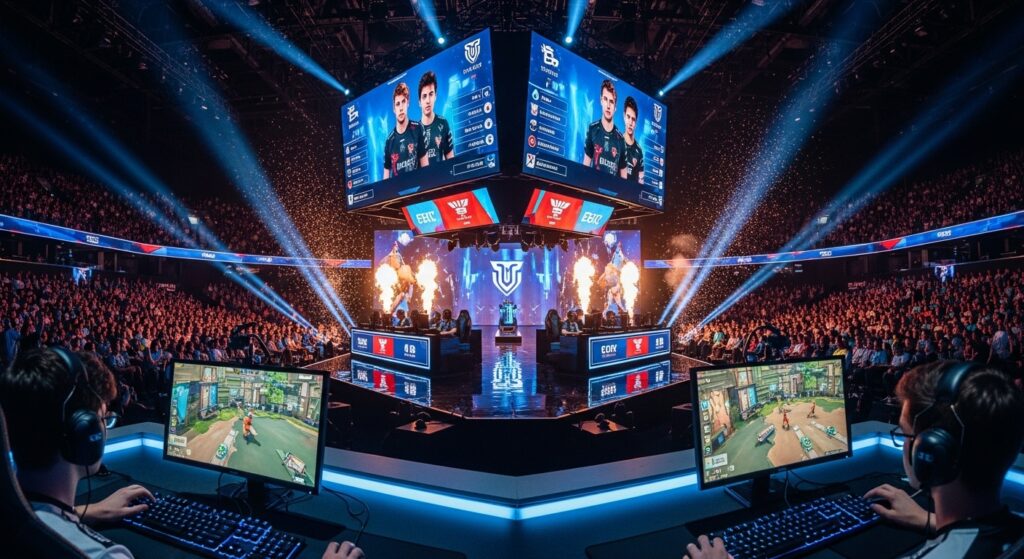
Esports, once considered a niche hobby, has rapidly transformed into a multi-billion dollar global industry. The competitive gaming scene is now an integral part of the digital entertainment landscape, attracting millions of viewers, players, and sponsors from around the world. With tournaments offering huge prize pools, dedicated fanbases, and even professional athletes, esports is no longer just “playing games.” It’s a cultural and economic phenomenon that is changing the way we view sports and entertainment. In this blog, we’ll explore the world of esports, from its humble beginnings to its present-day significance, and examine the future of this rapidly growing sector.
What is Esports?
At its core, esports refers to organized, multiplayer video game competitions. The term “esports” is short for “electronic sports,” which essentially encompasses professional gaming where players or teams compete in specific video games in front of a live or online audience. Esports includes a range of game genres, including strategy, first-person shooters, multiplayer online battle arena (MOBA) games, and sports simulations.
Competitive gaming can be traced back to the 1970s, but it wasn’t until the late 1990s and early 2000s that esports started to gain real traction. Games like StarCraft and Quake laid the groundwork for what would eventually become a booming industry. Today, esports is dominated by a select group of games like League of Legends, Counter-Strike: Global Offensive (CS:GO), Dota 2, and Fortnite, which each have their own competitive leagues, tournaments, and professional players.
The Origins of Esports: From Arcade to Online
The roots of competitive gaming can be traced back to the early arcade days. In 1980, Atari organized the first-ever video game tournament for Space Invaders, a popular arcade game, drawing over 10,000 participants. This event, while small in comparison to modern esports tournaments, marked the first major step in competitive gaming.
However, the true birth of esports happened during the 1990s with the advent of home PCs and the rise of online gaming. Games like Doom and Warcraft brought players together through local area networks (LAN) for the first time, allowing them to face off in real-time. The creation of tournaments like QuakeCon in 1996 further solidified the foundation of competitive gaming, offering players a chance to compete in large-scale events for cash prizes.
By the early 2000s, the rise of broadband internet revolutionized gaming, enabling players to compete with others around the world without needing to be in the same physical location. This was a game-changer for esports, as it paved the way for online tournaments, worldwide competitions, and massive esports organizations.
The Growth of Esports: From Niche Hobby to Global Industry
As internet speeds improved, so did the gaming experience. By the mid-2000s, esports began to attract significant attention, especially in countries like South Korea, where the gaming culture was already thriving. The rise of games like StarCraft and the launch of dedicated esports leagues like the Korean e-Sports Association helped establish esports as a serious professional pursuit.
In 2011, the launch of Twitch, a live-streaming platform dedicated to gaming content, played a pivotal role in the global expansion of esports. Gamers could now stream their gameplay in real-time, allowing fans to watch live competitions, interact with players, and support their favorite teams and personalities. This new form of digital entertainment made esports more accessible to the masses and sparked a cultural shift.
With the rise of platforms like Twitch, the demand for live esports tournaments grew exponentially. In 2013, the League of Legends World Championship broke viewership records, with millions of people tuning in to watch the finals. Since then, esports tournaments have become some of the most-watched events in the world, rivaling traditional sports in terms of viewership.
The Professionalization of Esports: Teams, Coaches, and Leagues
As esports evolved, so did its professional infrastructure. Top players and teams started to emerge, and esports organizations began to form with professional coaching staff, analysts, and managers. Teams like Team Liquid, Fnatic, and Cloud9 became synonymous with success in games like League of Legends and Dota 2.
These organizations offer structured environments for players, much like traditional sports teams. Players train regularly, receive coaching, and compete in both regional and international tournaments. The salaries of top esports players have soared, with some of the most successful players earning six-figure incomes through tournament winnings, sponsorships, and streaming deals. For example, Johan “N0tail” Sundstein, a professional Dota 2 player, has earned over $7 million in tournament prize money, making him one of the highest-paid esports athletes in history.
Major game developers like Riot Games (the creators of League of Legends) and Valve (the developers behind Dota 2) have played a significant role in professionalizing esports by establishing dedicated leagues, tournaments, and prize pools. Riot Games hosts the League of Legends Championship Series (LCS), a series of regional leagues culminating in the World Championship, while Valve’s The International tournament boasts some of the largest prize pools in esports history.
Esports: The Role of Streaming and Social Media
One of the key factors in esports’ meteoric rise is the power of streaming platforms like Twitch, YouTube Gaming, and Facebook Gaming. These platforms allow both players and fans to connect in real-time, watching live events, engaging in discussions, and participating in fan-driven content.
Streaming has also opened up new revenue streams for both players and organizations. Gamers can make money not only from competing in tournaments but also from sponsorships, donations, and advertising revenue on platforms like Twitch. Esports players, streamers, and content creators have become celebrities in their own right, with millions of followers and fans worldwide.
In addition to streaming, social media platforms like Twitter, Instagram, and TikTok allow players to build personal brands, interact with fans, and gain sponsorships from major companies. This integration of social media and esports has turned many professional gamers into influencers with far-reaching audiences.
The Massive Appeal of Esports
One of the reasons esports has become so popular is its accessibility. Unlike traditional sports, which often require physical skill and significant financial investment in equipment, anyone with a computer or console and an internet connection can become involved in esports. The barrier to entry is relatively low, allowing a wider range of people to participate, whether by playing, watching, or streaming.
Esports is also incredibly inclusive, with players from all over the world participating in tournaments. The digital nature of competitive gaming breaks down geographical and cultural barriers, creating a global community that transcends borders. Games like League of Legends, Counter-Strike: Global Offensive, and Fortnite have massive player bases that span continents, and the international appeal of these games has helped foster a sense of unity among fans.
The competitive aspect of esports, combined with the vibrant fan culture, creates an atmosphere that is similar to traditional sports. Fans cheer for their favorite teams and players, follow them on social media, and celebrate their victories. This passion and enthusiasm have contributed to the overall success of esports, making it a vibrant and thriving ecosystem.
The Future of Esports: Expanding Horizons
The future of esports looks incredibly promising. Industry experts predict that esports will continue to grow, with some projecting that it could surpass traditional sports in terms of viewership and revenue in the coming years. Mobile gaming, in particular, is expected to drive much of this growth. Games like PUBG Mobile, Free Fire, and Clash Royale are incredibly popular in regions like Asia, where mobile devices are the primary means of gaming. As mobile esports continues to grow, the accessibility of competitive gaming will only increase.
Esports is also moving into the mainstream. In recent years, several traditional sports organizations and major brands have invested in the esports industry. Sports teams like Paris Saint-Germain and Manchester City have launched their own esports divisions, while major companies like Coca-Cola and Mercedes-Benz have become sponsors of esports events.
The inclusion of esports in major sporting events like the Asian Games and potential inclusion in the Olympic Games signals the growing legitimacy of competitive gaming. While the debate about whether esports should be considered a “real sport” continues, there’s no denying its global appeal and cultural significance.
Conclusion: A New Era of Entertainment
Esports has come a long way from its humble beginnings in arcades and local LAN parties. Today, it is a global industry that spans continents, attracts millions of viewers, and offers players opportunities for fame and fortune. Whether through intense competition, engaging streams, or vibrant fan communities, esports has reshaped how we think about gaming and entertainment.
As the esports industry continues to grow and evolve, the future looks bright. New games, technologies, and innovations will only continue to expand the reach of competitive gaming, bringing in more fans and players from all walks of life. The rise of esports is a testament to the power of digital entertainment, and its impact on culture and society will only continue to grow in the years to come.