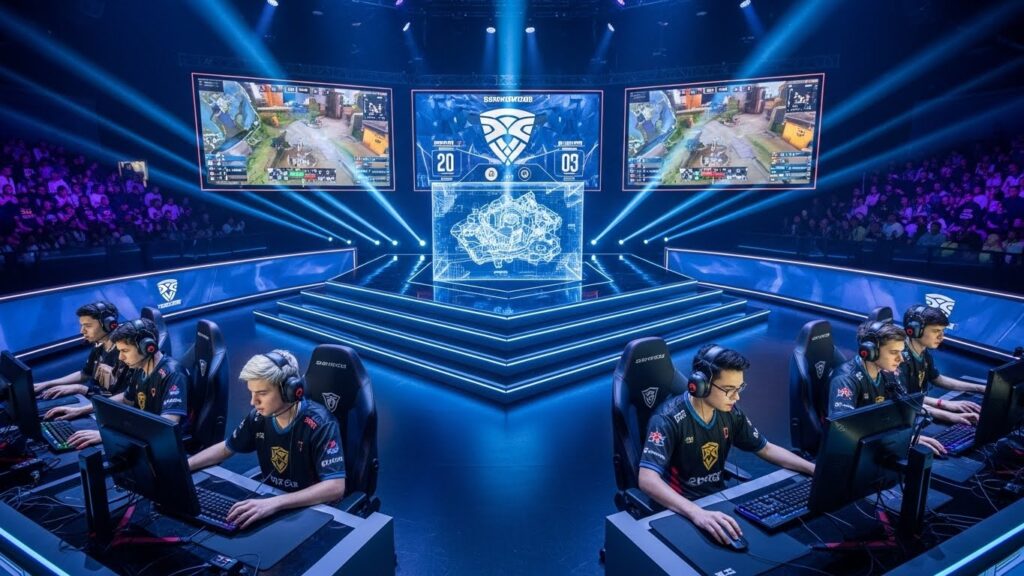
The world of competitive gaming, or esports, has surged into the mainstream, capturing the attention of millions across the globe. Once a niche hobby enjoyed by a small group of enthusiasts, esports has become a multi-billion-dollar industry, with its roots firmly embedded in the digital age. Whether it’s the high-octane action of League of Legends, the strategic gameplay of Dota 2, or the sheer speed and skill of Counter-Strike: Global Offensive, esports has captivated audiences with its unique blend of competition, entertainment, and innovation.
As the esports ecosystem continues to evolve, it’s not just players who benefit; the entire landscape of sports and entertainment is being redefined. The evolution of esports, its growing popularity, and the cultural impact it is having on the world are phenomena that cannot be ignored. In this blog, we’ll explore the rise of esports, its impact on traditional sports, its future potential, and the various factors that are shaping its global dominance.
The Birth and Evolution of Esports
Esports began as a subculture in the early 2000s, when gamers started organizing tournaments for popular games like StarCraft and Quake. While these events were small and local, they laid the groundwork for what would eventually become an international phenomenon. The major turning point came in the mid-2010s, when platforms like Twitch and YouTube Gaming gave esports a wider audience. These platforms provided an accessible space for fans to watch live competitions, interact with players, and follow their favorite teams, propelling the industry into the mainstream.
By 2017, esports had transformed into a legitimate industry, with major sponsorships from global brands, increased media coverage, and a growing base of dedicated fans. Organizations like Riot Games, Blizzard Entertainment, and Valve Corporation began pouring resources into competitive gaming, organizing massive tournaments like The International (Dota 2’s World Championship) and the League of Legends World Championship, which offered multi-million-dollar prize pools. These tournaments are now broadcast to millions of viewers worldwide, making esports a multi-faceted experience that combines competition with entertainment.
Esports: A New Kind of Spectator Sport
One of the most striking features of esports is its ability to offer a unique viewing experience. Unlike traditional sports, where fans gather in stadiums to watch games live, esports fans can watch competitions from the comfort of their homes or local arenas, thanks to live streaming platforms. The rise of services like Twitch has fundamentally changed how audiences interact with their favorite games. Viewers can not only watch the games but also communicate with players, analysts, and other fans in real-time. This level of interaction has created a more engaging and immersive environment compared to traditional sports broadcasting.
The viewing experience is enhanced by the accessibility of esports. Traditional sports can often be expensive or difficult to follow depending on the region, whereas esports can be accessed from anywhere with an internet connection. This democratization of sports viewing has contributed to the rapid growth of esports, especially in regions where access to traditional sports infrastructure is limited.
Furthermore, esports competitions often include in-depth commentary and analysis, allowing fans to better understand the strategies behind each match. Many esports fans enjoy learning about the mechanics of the games, and live broadcasts are designed to be educational as much as they are entertaining. Professional casters and analysts break down the action, adding an element of strategy and insight that enhances the overall experience.
The Players: Heroes of the Digital Arena
In traditional sports, athletes are often celebrated for their physical prowess and skill. In esports, players are revered for their mental agility, reflexes, and deep understanding of the games they play. The best esports players are often able to maintain a level of focus and precision that seems almost superhuman, and this ability to make split-second decisions in high-stress situations is what separates the elite from the rest of the pack.
Esports players undergo intense training regimens that mirror those of traditional athletes. Many of the best players train for several hours a day, practicing their skills, studying game mechanics, and working on their team dynamics. Physical conditioning is also an important aspect of a player’s training, as the mental focus required for long gaming sessions can lead to physical strain. Players must maintain a healthy lifestyle to sustain their performance over time, and esports teams often employ nutritionists, psychologists, and trainers to help optimize their players’ well-being.
The rise of esports has created a new wave of celebrity figures. Players like Faker (Lee Sang-hyeok) from League of Legends, Dendi (Danil Ishutin) from Dota 2, and s1mple (Oleksandr Kostyliev) from Counter-Strike: Global Offensive have become household names in the gaming world. These players are not only admired for their exceptional skills but also for their personalities, inspiring legions of fans who follow their every move. The ability to build a personal brand within the esports ecosystem has transformed players into global icons, attracting sponsorships, endorsements, and opportunities outside the gaming world.
The Economic Impact of Esports
Esports is now a multi-billion-dollar industry that contributes significantly to the global economy. In 2022, the esports industry generated over $1.38 billion in revenue, and this figure is expected to continue growing in the coming years. Revenue comes from a variety of sources, including sponsorships, media rights, advertising, ticket sales, and merchandise. Major companies like Coca-Cola, Red Bull, Intel, and Mercedes-Benz have all partnered with esports organizations, helping fund tournaments, teams, and events. These partnerships have allowed esports to thrive, providing the necessary financial backing to grow its infrastructure and support its expanding fanbase.
Additionally, the rise of esports has created new job opportunities, ranging from content creators and streamers to tournament organizers, team managers, and analysts. Esports has given rise to a new economy centered around gaming, and many people are now able to make a living from their passion for competitive gaming. Platforms like Twitch, YouTube Gaming, and Facebook Gaming have turned streamers into full-time professionals, creating a new type of celebrity influencer.
The emergence of esports betting has also added another layer of complexity to the industry. With the rise of esports competitions, many fans now place bets on matches, much like they would in traditional sports. This aspect of the industry has opened up new revenue streams and has led to the development of esports-specific betting platforms, further solidifying esports as a legitimate market.
The Global Reach of Esports
Esports is not bound by geographical boundaries. In fact, one of the key factors driving the growth of the industry is its global nature. Major esports events are broadcast to millions of fans worldwide, and players from all corners of the globe compete in international tournaments. Unlike traditional sports, where certain games are limited to specific countries or regions, esports offers a level playing field for players from every corner of the globe. This has led to the rise of international esports leagues, where top players and teams from different regions compete for supremacy.
Games like League of Legends, Dota 2, and Valorant have become global phenomena, with professional leagues and tournaments taking place in North America, Europe, Asia, and beyond. In 2019, the League of Legends World Championship attracted over 100 million viewers globally, rivaling some of the most-watched events in traditional sports.
The growth of esports in countries like China, South Korea, and the United States has played a crucial role in the expansion of the industry, but there are also emerging esports markets in regions like Latin America, Southeast Asia, and the Middle East. As internet infrastructure improves in these regions, more players are able to participate in the esports ecosystem, further solidifying its global reach.
The Future of Esports
The future of esports looks incredibly promising. As the industry continues to evolve, we can expect to see even more technological innovations, such as the integration of virtual reality (VR) and augmented reality (AR) into esports competitions. These technologies will allow players to immerse themselves in the game world like never before, creating new forms of competition and engagement for fans.
In addition, as esports becomes more mainstream, there will likely be increased collaboration with traditional sports organizations. We’re already seeing examples of this in the form of hybrid sports leagues that combine esports with traditional sports, as well as sponsorships from non-endemic companies that recognize the value of engaging with esports audiences.
Another exciting development is the increasing involvement of educational institutions in the esports space. Many universities and colleges are now offering scholarships for esports players and establishing dedicated esports programs to help nurture the next generation of talent. As esports continues to grow in prestige and recognition, it could eventually become a recognized form of collegiate athletics, with its own dedicated leagues and tournaments.
Conclusion: Esports as the Future of Competitive Entertainment
Esports has come a long way since its humble beginnings. From small LAN parties to global tournaments watched by millions, the industry has transformed into a thriving, multi-billion-dollar ecosystem. Esports is no longer just about gaming; it’s about entertainment, culture, and innovation. The impact of esports on the world of sports and entertainment is undeniable, and its potential for growth remains boundless.
As technology continues to advance, and as more people recognize the value of competitive gaming, esports will only continue to rise. The world of esports is a testament to the power of digital culture and its ability to reshape industries and create new opportunities. Whether you’re a player, a fan, or simply someone looking to understand the future of competitive entertainment, one thing is certain: esports is here to stay.