Introduction
Merchandise is a powerful tool in esports, allowing teams, players, and brands to connect with fans while generating revenue. From apparel to collectibles, esports merchandise enhances visibility, loyalty, and monetization opportunities.
This blog explores esports merchandise strategies, product types, marketing, challenges, and future trends.
Importance of Merchandise in Esports
- Strengthens team and player branding.
- Provides fans with tangible ways to show support.
- Generates additional revenue streams beyond tournaments and sponsorships.
- Enhances fan engagement through collectibles and exclusive items.
Types of Esports Merchandise
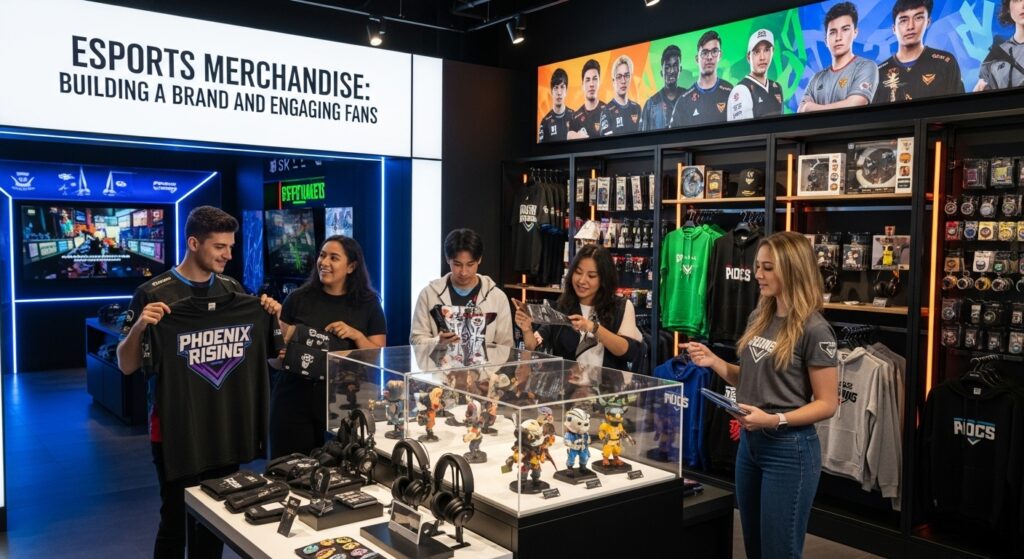
- Apparel: Jerseys, hoodies, hats, and casual wear featuring team logos.
- Accessories: Mousepads, keycaps, and gaming gear branded with teams.
- Digital Merchandise: Skins, avatars, and virtual collectibles.
- Collectibles: Limited edition figures, posters, and signed items.
- Event Merchandise: Special products for tournaments, conventions, or online campaigns.
Strategies for Selling Merchandise
- Launch exclusive product lines to create demand.
- Collaborate with popular brands for co-branded items.
- Utilize e-commerce platforms and social media for global reach.
- Offer limited-edition collectibles tied to player milestones or achievements.
- Engage fans through contests, giveaways, and loyalty programs.
Marketing and Promotion
- Social media campaigns highlighting merchandise releases.
- Influencer partnerships for product promotion.
- Event activations during tournaments for in-person engagement.
- Integration with streaming platforms for live promotion.
Challenges
- Predicting demand for different fan demographics.
- Managing production, shipping, and global logistics.
- Preventing counterfeit merchandise.
- Balancing affordability with high-quality products.
Future Trends
- Integration of digital and physical merchandise (NFT + apparel).
- Gamified reward systems for merchandise purchases.
- Personalized and customizable products for fans.
- Global distribution through e-commerce and localized stores.
Conclusion
Esports merchandise is more than just products—it’s a way to strengthen brand identity, increase revenue, and engage fans globally. Strategic planning and creative marketing are key to success in this space.