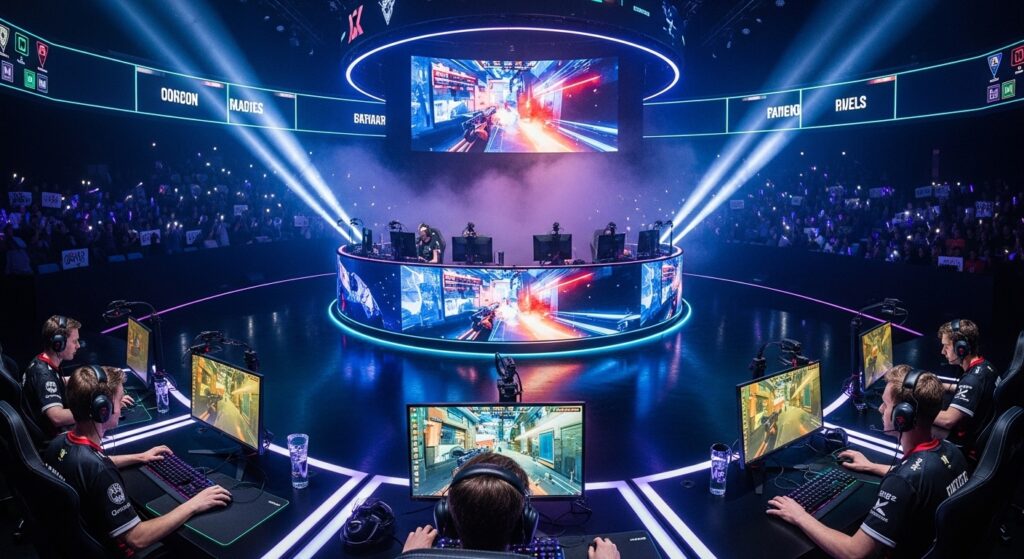
Esports, or electronic sports, has evolved from a niche pastime into a global cultural and economic powerhouse. Once considered a hobby for tech enthusiasts, esports now commands stadiums, broadcast deals, and massive audiences rivaling traditional sports. Professional players train rigorously, teams are sponsored by global brands, and tournaments offer multi-million-dollar prize pools. The rise of esports reflects the convergence of technology, entertainment, and competitive spirit, shaping a new generation of athletes and fans.
This blog explores the history, growth, cultural impact, technological innovation, and future of esports. It delves into how esports has transformed competitive gaming into a professional industry and why it continues to captivate millions worldwide.
The Origins of Esports
Esports traces its origins to the early days of arcade and PC gaming. In the 1970s and 1980s, video game competitions emerged in arcades, where players competed for high scores in games like Pac-Man and Space Invaders. These competitions, often local and informal, set the foundation for organized gaming tournaments.
The 1990s introduced networked multiplayer gaming, which laid the groundwork for modern esports. Titles like Doom and Quake allowed players to compete over local area networks (LANs), leading to organized competitions and the first professional gaming communities. This era marked the beginning of esports as a structured form of competition.
By the late 1990s, online multiplayer games such as StarCraft and Counter-Strike brought competitive gaming to a global audience. South Korea became a pioneer in professional gaming, creating professional leagues, televised competitions, and dedicated esports facilities. The concept of esports as a career was born, and its professionalization accelerated in the early 2000s.
The Growth of Esports as an Industry
The past two decades have witnessed exponential growth in esports. The industry now generates billions of dollars annually, fueled by sponsorships, media rights, merchandise, ticket sales, and streaming platforms. Major organizations, such as Riot Games, Blizzard Entertainment, and Valve, have invested heavily in esports ecosystems, creating professional leagues, tournaments, and events with worldwide reach.
Professional teams operate similarly to traditional sports franchises. They hire players, coaches, analysts, and support staff, focusing on performance optimization, training, and strategy. International tournaments, such as the League of Legends World Championship, The International Dota 2 Championship, and the CS:GO Majors, attract millions of viewers online and in stadiums, often offering prize pools exceeding ten million dollars.
Streaming platforms like Twitch, YouTube Gaming, and Facebook Gaming have transformed esports into a spectator sport. Fans can watch live matches, interact with players, and participate in a global community of enthusiasts. The accessibility of streaming has played a pivotal role in expanding the audience and monetizing esports content.
Popular Esports Titles
Esports encompasses a wide range of game genres, each attracting unique communities and competitive ecosystems.
1. Multiplayer Online Battle Arena (MOBA)
Games like League of Legends and Dota 2 dominate the MOBA category. Players form teams, select unique heroes or champions, and compete to destroy the opponent’s base. MOBAs are known for strategic depth, team coordination, and intense gameplay, making them ideal for competitive tournaments.
2. First-Person Shooters (FPS)
FPS games, including Counter-Strike: Global Offensive, Overwatch, and Call of Duty, emphasize precision, reflexes, and tactical decision-making. FPS esports attracts large audiences due to its fast-paced action, teamwork, and high-stakes tournaments.
3. Battle Royale
Battle royale titles like Fortnite and PUBG combine survival, strategy, and shooter elements. Players compete in large-scale matches, often with last-person-standing objectives. The unpredictability and dynamic gameplay have made this genre a favorite among both casual and professional players.
4. Sports Simulations
Games such as FIFA and NBA 2K replicate real-world sports in digital form. Competitive leagues and tournaments mirror traditional sports, allowing players to demonstrate their strategic and technical skills in virtual arenas.
5. Fighting Games
Fighting games like Street Fighter, Tekken, and Super Smash Bros. emphasize individual skill, reflexes, and matchup knowledge. These esports have passionate communities and long-standing competitive scenes with global tournaments.
Training and Preparation in Esports
Professional esports players train with a level of dedication comparable to traditional athletes. Preparation involves both physical and mental conditioning.
Physical fitness is crucial for maintaining reflexes, endurance, and focus during long practice sessions and tournaments. Many players incorporate exercise routines, nutrition plans, and ergonomic setups to prevent injuries like carpal tunnel syndrome and eye strain.
Mental preparation is equally important. Players analyze opponents, study game mechanics, and develop strategies with coaches and analysts. Focus, stress management, and teamwork are emphasized during practice sessions. Just like traditional sports, esports requires discipline, resilience, and continuous learning to maintain competitive performance.
The Role of Technology in Esports
Esports would not exist without advanced technology. High-performance computers, gaming peripherals, and high-speed internet connections are essential for competitive play. Beyond hardware, software innovations such as spectator modes, replay systems, and analytics tools enhance both player performance and fan engagement.
Streaming technology has democratized esports, allowing millions of viewers worldwide to watch live events. Platforms integrate interactive features, including chat, polls, and in-game overlays, making esports viewing a participatory experience. Virtual reality and augmented reality are beginning to influence esports, offering immersive spectating and gameplay possibilities.
Artificial intelligence is also playing a role in strategy analysis, player performance monitoring, and anti-cheat mechanisms. By leveraging AI, esports organizations can maintain fairness and optimize training regimens.
The Cultural Impact of Esports
Esports has become a global cultural phenomenon. It influences fashion, media, music, and even education. Iconic players are recognized worldwide, and esports merchandise, apparel, and branding are increasingly mainstream.
The community aspect of esports fosters collaboration and social interaction. Fans engage through forums, social media, and fan events, creating a sense of belonging and shared passion. Cosplay, fan art, and streaming content contribute to a vibrant culture that extends beyond the games themselves.
Educational institutions have also embraced esports. Universities and colleges now offer scholarships, esports programs, and competitive teams, legitimizing esports as a career path and academic pursuit.
Esports and Economic Growth
The economic impact of esports is substantial. The industry creates jobs in game development, event management, broadcasting, marketing, coaching, and analytics. Major tournaments drive tourism, sponsorship, and advertising revenue, contributing to regional economies.
Brands outside the gaming industry recognize esports as a marketing avenue to reach younger, digitally-savvy audiences. Collaborations with apparel brands, beverage companies, and technology firms have become common, further solidifying esports as a commercial powerhouse.
Challenges Facing Esports
Despite its growth, esports faces challenges that must be addressed to ensure long-term sustainability.
- Player Burnout: Intense training schedules can lead to mental and physical exhaustion. Proper support systems are essential.
- Regulatory Concerns: The global nature of esports creates complex legal issues regarding gambling, contracts, and intellectual property.
- Toxicity and Online Harassment: Competitive gaming communities must address harassment, cheating, and negative behavior.
- Monetization and Accessibility: Ensuring fair revenue distribution and accessibility for emerging players remains a priority for industry growth.
The Future of Esports
The future of esports is poised for continued expansion. Innovations in technology, streaming, and virtual reality will create more immersive experiences for both players and spectators. Cross-platform play will unify diverse gaming communities, while AI and analytics will enhance training and strategic development.
Esports may also expand into mainstream entertainment, integrating with music, movies, and interactive media. As traditional sports and esports converge through collaborations and hybrid events, the distinction between physical and digital competition will continue to blur.
The inclusion of esports in international multi-sport events and discussions about Olympic recognition highlights its growing legitimacy as a competitive discipline. With increasing global investment and audience engagement, esports is set to remain at the forefront of digital entertainment for years to come.
Conclusion
Esports has transformed the way we view competitive gaming. From humble beginnings in arcades to global tournaments with multi-million-dollar prize pools, esports represents a fusion of technology, entertainment, and athleticism. It offers opportunities for professional players, economic growth, and global communities while influencing culture, education, and media.
As technology continues to advance and audiences expand, esports will further solidify its place as a mainstream form of entertainment. Its unique blend of skill, strategy, and spectacle ensures that esports will continue to captivate millions worldwide, shaping the future of competitive gaming and digital entertainment.
Esports is no longer just a game—it is a global movement, a career path, and a cultural phenomenon that exemplifies the power of digital competition in the modern world.