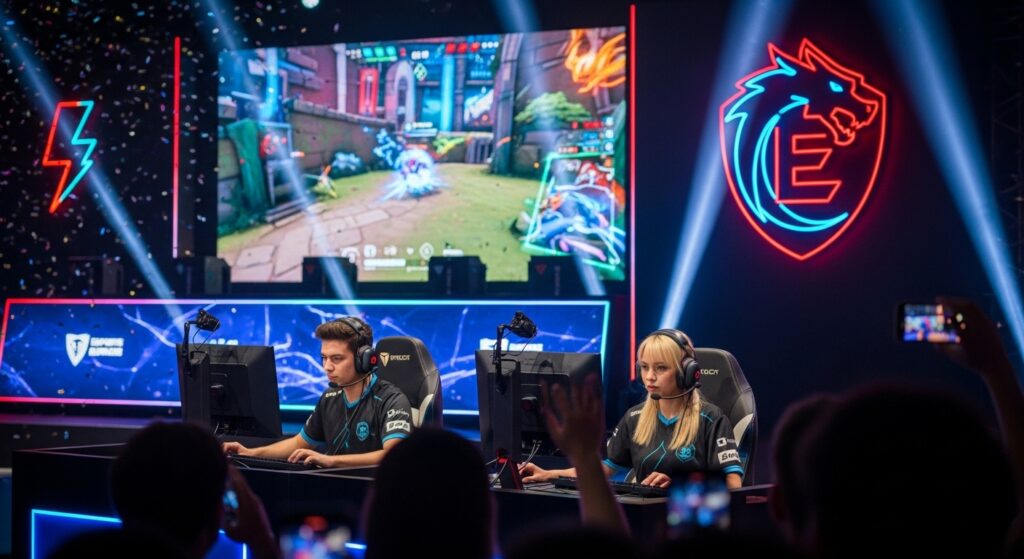
In the world of entertainment, few industries have experienced as meteoric a rise as esports. What began as small, underground gaming competitions has blossomed into a global phenomenon that attracts millions of viewers and generates billions in revenue. From casual gaming sessions to highly-organized professional tournaments, esports has captured the hearts of players and fans alike. In this blog post, we’ll delve into the history, growth, and future of esports, exploring how it has become a dominant force in the entertainment world.
What Exactly is Esports?
Esports, short for electronic sports, refers to organized, multiplayer video game competitions, particularly between professional players, individually or as teams. While gaming has always had a competitive element, it wasn’t until the rise of the internet and online gaming that esports began to evolve into its modern form. Today, esports spans a wide variety of video games, from strategy games like StarCraft II and League of Legends, to first-person shooters like Counter-Strike and Overwatch, and battle royale games such as Fortnite and PUBG.
What makes esports unique is its competitive nature, where skill, strategy, and teamwork come together to create high-stakes, often high-energy events. Unlike casual gaming, esports involves professional players who dedicate countless hours to training and perfecting their craft, much like traditional athletes.
The Early Days of Competitive Gaming
Esports’ roots can be traced back to the early days of gaming itself. The first recorded competitive gaming event took place in 1972 at Stanford University with a game called Spacewar, where participants battled it out for a prize of a year’s subscription to Rolling Stone magazine. Fast forward to the 1990s, and competitive gaming began gaining traction with the rise of arcade games and PC gaming. The release of games like Quake, Warcraft, and StarCraft brought the first major tournaments, albeit on a much smaller scale compared to today.
However, it was the launch of platforms like Battle.net (Blizzard’s online gaming service) in the late 90s and Twitch in the early 2010s that truly laid the foundation for the modern esports landscape. As internet speeds improved and online multiplayer gaming became more accessible, competitive gaming started to shift from local LAN (local area network) parties to large-scale, worldwide tournaments, opening doors for the global audience that exists today.
The Rise of Esports: From Underground to Mainstream
The real turning point for esports came in the 2000s. Games like Counter-Strike, Warcraft III, and StarCraft became the pillars of competitive gaming, with major events such as the World Cyber Games and ESL Pro League attracting international attention. However, the explosive growth of esports came with the rise of streaming platforms such as Twitch in 2011. These platforms allowed players to stream their gameplay live to audiences around the world, turning top-tier gamers into celebrities and creating a direct connection between players and their fans.
The evolution of esports was further cemented by the creation of large, multinational esports leagues and tournaments. For example, League of Legends introduced the League of Legends World Championship, a tournament that now attracts millions of viewers every year. Dota 2 followed suit with The International, which offers one of the largest prize pools in the world. These tournaments not only brought in millions of dollars in sponsorships and ad revenue but also made esports a spectacle, drawing in viewers who had never before considered watching video games as a form of entertainment.
The Economic Boom of Esports
Today, esports has become a billion-dollar industry. In 2021, esports revenues were estimated at over $1 billion, and this number continues to rise. The primary revenue streams for esports include sponsorships, media rights, advertising, ticket sales for live events, and merchandise. Major brands, such as Coca-Cola, Intel, and Nike, are now deeply involved in the esports ecosystem, pouring money into sponsorships and partnerships with esports teams and events.
Streaming platforms like Twitch and YouTube Gaming are key players in this economic growth. Professional gamers and streamers are now able to monetize their content through subscriptions, ads, and donations from their viewers. Some top streamers make millions annually, showcasing just how financially rewarding a career in esports can be.
Esports has also seen the emergence of esports-specific organizations and leagues, such as the Overwatch League, the Call of Duty League, and the Rocket League Championship Series. These leagues operate similarly to traditional sports leagues, offering a more structured, franchised approach to competitive gaming, which further contributes to the industry’s economic growth.
The Professionalization of Esports Players
The rapid growth of esports has led to a significant shift in how players train and perform. What was once seen as a hobby or casual pastime has transformed into a professional career, where players dedicate their lives to improving their skills, refining strategies, and competing in high-stakes tournaments. Just like athletes in traditional sports, esports players follow intense training regimens, often practicing for 8-10 hours a day.
In addition to in-game skill, esports players also rely on coaches, analysts, and psychologists to help them stay at the top of their game. The mental and physical toll of professional gaming is often underestimated, but players face pressure to perform consistently, manage stress, and maintain a healthy lifestyle to sustain long careers.
Moreover, professional esports organizations now operate much like sports franchises. Players are signed to teams, with contracts often including salaries, bonuses, and sponsorship deals. Some teams also offer additional benefits, such as training facilities and support staff, to help players achieve peak performance.
The Future of Esports: What Lies Ahead?
The future of esports is both exciting and uncertain. As technology continues to evolve, we can expect new innovations to shape the esports landscape. The rise of 5G technology and cloud gaming will likely make gaming more accessible to a global audience, removing barriers like hardware requirements and high-speed internet connections.
Virtual Reality (VR) and Augmented Reality (AR) could also play a major role in the future of esports, offering more immersive and interactive experiences for both players and viewers. Imagine a VR tournament where players physically move in a 3D space, adding a new dimension to the game itself. This could revolutionize how we experience competitive gaming and take esports to a whole new level.
Furthermore, with the growing popularity of esports in mainstream media, we may see greater integration with traditional sports. Some professional sports leagues, such as the NBA, have already begun exploring the esports world, with teams investing in esports franchises. It’s not beyond reason to think that esports could eventually be included in major events like the Olympics, further legitimizing competitive gaming as a global sport.
Conclusion: Esports Is Here to Stay
Esports has come a long way from its humble beginnings, evolving into a global entertainment powerhouse with millions of fans and players. The industry has transformed into a professional sport, offering lucrative careers for players, coaches, analysts, and streamers alike. With the continued growth of streaming platforms, sponsorships, and tournaments, esports is not only here to stay, but it will likely continue to grow and evolve in ways we can’t yet predict.
For anyone interested in competitive gaming, whether as a player, a fan, or a professional in the industry, now is the time to get involved. The esports world is vibrant, fast-paced, and filled with opportunities, making it an exciting space to watch—and be a part of—as it continues to expand into the future.