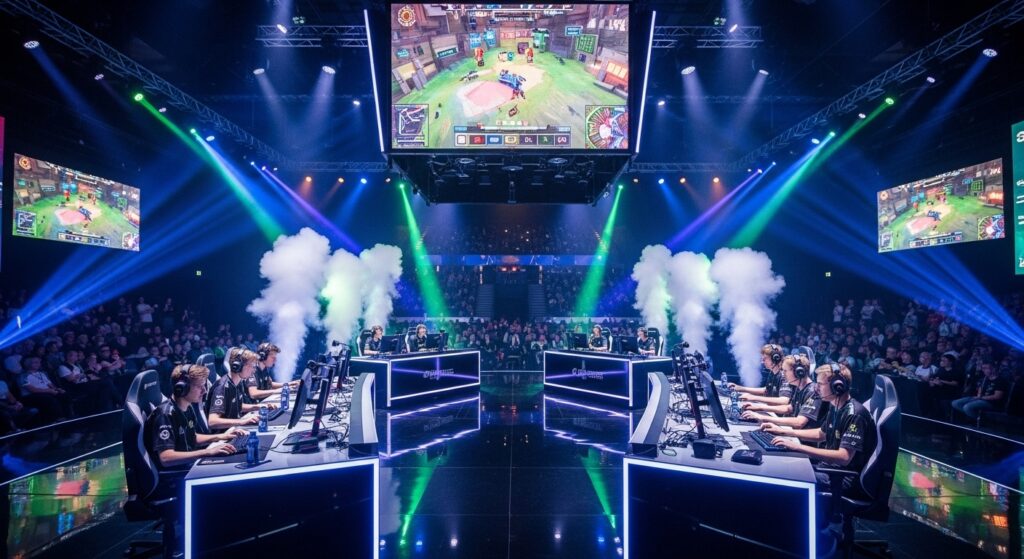
Esports, or competitive video gaming, has evolved from a niche hobby to a global phenomenon. What once started as small LAN tournaments in basements and cybercafés is now a billion-dollar industry, with millions of fans tuning in to watch top players and teams compete for glory. Esports has gained recognition as a legitimate sport, with professional leagues, sponsorships, live broadcasts, and even scholarships for collegiate players. In this blog, we’ll explore how esports has transformed the entertainment landscape and what the future holds for this rapidly growing industry.
The Evolution of Esports: From Casual Gaming to Global Tournaments
Esports has come a long way since its early days. Initially, competitive gaming was a small, underground community, with friends and enthusiasts gathering to play titles like “Street Fighter,” “Quake,” and “StarCraft.” These early competitions were often informal, held in arcades or through local multiplayer setups. However, as internet connectivity and gaming platforms evolved, so did the scale of competitive gaming.
By the early 2000s, major tournaments like the “World Cyber Games” and “Electronic Sports World Cup” began to draw larger crowds, and the prize pools grew significantly. Games like “League of Legends,” “Dota 2,” and “Counter-Strike: Global Offensive” helped shape modern esports, turning competitive gaming into a professional venture. Today, the esports industry boasts massive tournaments, such as The International and the League of Legends World Championship, attracting millions of viewers and offering multi-million-dollar prize pools.
The Global Appeal of Esports: A Universal Language
One of the key factors behind the rise of esports is its universal appeal. Video games have no language barriers; players from across the world can come together to compete, forming a truly global community. Whether it’s a player from South Korea facing off against someone from the United States, or teams from Europe battling it out with Southeast Asia, esports transcends geographical and cultural boundaries.
Esports tournaments are broadcasted globally, often in multiple languages, and are available to a wide audience across platforms like Twitch, YouTube, and even traditional sports networks like ESPN. This global accessibility makes esports appealing to fans and players from all walks of life.
Moreover, the accessibility of gaming devices—smartphones, PCs, and consoles—allows almost anyone with an internet connection to get involved, whether they’re playing casually or aspiring to be professional. As gaming hardware becomes more affordable and high-speed internet becomes more widespread, the global reach of esports continues to grow, connecting people across continents in ways that traditional sports cannot.
The Professionalization of Esports: From Players to Organizations
Esports has transformed from a hobby into a fully professionalized industry. Today, esports players are treated like professional athletes, with coaches, analysts, and management teams guiding their careers. Just like traditional sports, esports athletes spend hours refining their skills, studying game mechanics, and strategizing with their teams.
Esports organizations have emerged, offering players contracts, salaries, and sponsorships. These organizations often field multiple teams competing in various game titles, and their players represent brands and organizations just like those in traditional sports. Big-name sponsors, including tech giants, energy drinks, and apparel companies, now invest in esports, further legitimizing it as a professional endeavor.
Major esports leagues, such as the Overwatch League, the League of Legends Championship Series, and the Call of Duty League, have become fixtures in the gaming community. These leagues are structured similarly to traditional sports leagues, complete with seasons, playoffs, and championships, providing players with both competitive opportunities and financial rewards. For many, esports has become a viable career path, leading to sponsorship deals, streaming opportunities, and long-term financial stability.
The Growth of Esports Viewership: Fans, Streaming, and Live Events
One of the most striking aspects of esports is the immense growth of its fan base. According to recent reports, there are over 450 million esports fans worldwide, with millions more tuning in for major tournaments. Unlike traditional sports, esports fans often consume content digitally, watching games streamed live on platforms like Twitch, YouTube Gaming, and Facebook Gaming. These streaming platforms have become a critical part of the esports ecosystem, offering fans an interactive and engaging way to experience competitions.
The rise of esports streaming has given rise to a new wave of “influencers” and content creators who build large followings by streaming their gameplay, sharing tips, and engaging with fans. Top streamers have turned their gaming skills into profitable ventures, securing sponsorships, partnerships, and even their own merchandise lines.
Live events, too, have become massive spectacles. Esports tournaments often fill arenas and stadiums, with fans showing up to watch their favorite teams in action. The “League of Legends World Championship,” held in large venues like Madison Square Garden and the Bird’s Nest in Beijing, is just one example of how esports has made its way into mainstream entertainment. These events are not only about watching the competition, but also about creating a festival-like atmosphere, with fan meet-ups, merchandise booths, and live music performances, making esports tournaments an immersive experience for attendees.
The Role of Esports in Education and Career Development
As esports continues to grow, so does its role in education. Colleges and universities around the world are offering esports scholarships, and several have even established dedicated esports programs and varsity teams. In fact, some institutions have begun to treat esports with the same level of importance as traditional sports, offering students the opportunity to compete at a high level while earning a degree. This shift in attitude has led to the formation of collegiate esports leagues, where young players can develop their skills and gain exposure to professional scouts and teams.
Beyond the players themselves, esports has also created a range of career opportunities. From analysts, broadcasters, and coaches to content creators, event organizers, and digital marketers, the esports industry offers diverse career paths for those interested in pursuing a future in gaming. As esports continues to integrate into educational systems, it will likely inspire a new generation of professionals who will contribute to the industry’s future growth.
The Future of Esports: Challenges and Opportunities
While esports is thriving, the industry still faces several challenges. One of the main obstacles is sustainability. As the market becomes saturated with teams, tournaments, and sponsors, maintaining growth and profitability will require careful management. Esports organizations must find ways to retain fan interest, ensure fair competition, and manage the increasing demands placed on players and staff.
Additionally, there are issues related to player health and well-being. Esports athletes often spend long hours training and competing, leading to physical and mental strain. Issues like repetitive strain injuries, burnout, and lack of proper sleep have raised concerns about the long-term health of players. Just as traditional athletes rely on trainers and wellness experts, esports organizations must begin to incorporate similar support structures to protect their players.
The future of esports also includes potential mainstream integration. As virtual reality, augmented reality, and artificial intelligence continue to evolve, esports could take on entirely new forms, making competitions even more immersive and interactive for both players and fans.
Conclusion: Esports as the Entertainment of Tomorrow
Esports has transcended its origins as a hobby, becoming one of the most exciting and lucrative forms of entertainment in the world today. With its massive global audience, professional players, and increasing mainstream recognition, esports is reshaping how we view both competition and entertainment. Whether you’re an aspiring gamer, a fan, or simply an observer, esports represents the future of interactive entertainment, offering limitless possibilities for growth, innovation, and excitement.
As the industry continues to expand, esports will not only change the way we play games but also how we experience them, making it a cornerstone of modern culture for generations to come.