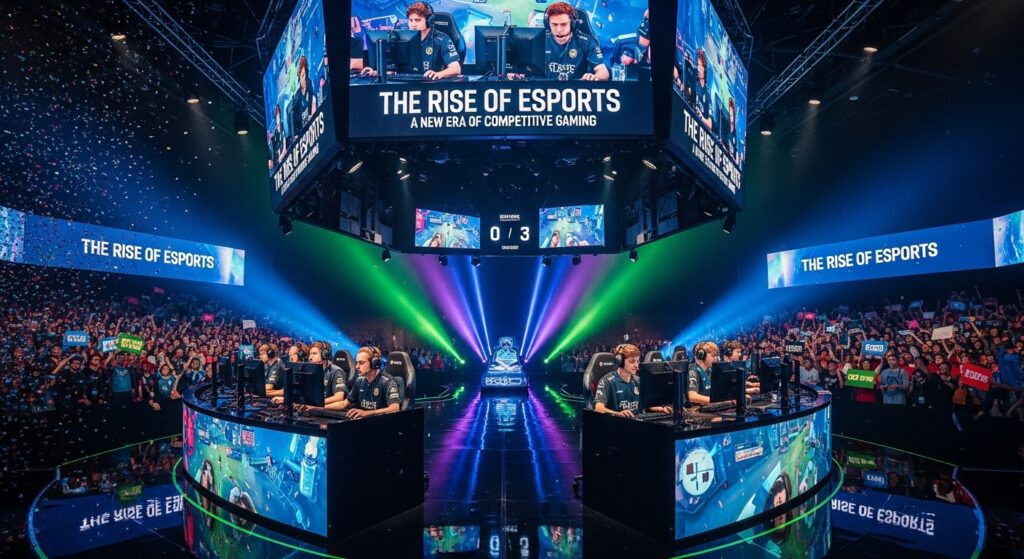
In the last two decades, gaming has evolved from a niche hobby into a global phenomenon. At the forefront of this transformation is esports, the world of organized competitive gaming. Esports has grown exponentially, transforming how we perceive games, competition, and entertainment. From small local tournaments to massive international events, esports has created a culture that rivals traditional sports in both viewership and financial influence.
What Is Esports?
Esports, short for electronic sports, refers to competitive video gaming where individuals or teams compete against each other in structured tournaments or leagues. Unlike casual gaming, esports requires rigorous practice, strategy, and skill. Games range from first-person shooters and real-time strategy games to multiplayer online battle arenas and sports simulations. Popular titles include League of Legends, Dota 2, Counter-Strike, Fortnite, and FIFA.
What makes esports unique is its professionalization. Players, often called pro gamers, train almost like athletes, dedicating countless hours to improving their reflexes, game sense, and teamwork. Esports organizations provide coaches, analysts, and support staff to help teams achieve peak performance, mirroring traditional sports structures.
The Historical Roots of Competitive Gaming
While esports may seem like a recent phenomenon, competitive gaming has deep roots. The concept dates back to the early 1980s with games like Space Invaders and Pac-Man. Arcades were the hub for competitive play, where players would compete for high scores and local recognition. In 1980, the first video game competition, the Space Invaders Championship, attracted over ten thousand participants across the United States, demonstrating early interest in competitive gaming.
The 1990s saw a surge in multiplayer PC gaming, especially with games like Doom, Quake, and StarCraft. These games introduced competitive ladders and online tournaments, setting the stage for organized esports leagues. StarCraft, in particular, became a cultural phenomenon in South Korea, where professional gaming gained mainstream recognition and players were treated like celebrities.
The Evolution of Esports Into a Global Industry
The 2000s marked the beginning of esports as a global industry. The rise of broadband internet allowed players to connect online, facilitating worldwide competitions. This era saw the emergence of major esports tournaments with significant prize pools. Games like Counter-Strike 1.6, Warcraft III, and World of Warcraft became staples of competitive play.
Streaming platforms and video-sharing sites revolutionized how audiences consumed esports content. Platforms like Twitch and YouTube Gaming enabled fans to watch live matches, follow their favorite players, and engage in communities centered around games. The accessibility of live streaming played a crucial role in the rapid growth of esports, transforming it into a spectator sport with millions of viewers worldwide.
Popular Esports Genres and Games
Esports encompasses various game genres, each with unique competitive dynamics:
Multiplayer Online Battle Arena (MOBA)
MOBA games involve teams competing to destroy the opponent’s base while defending their own. Strategy, coordination, and hero selection are vital. League of Legends and Dota 2 are prime examples of MOBA esports. These games often feature large-scale international tournaments with multi-million-dollar prize pools.
First-Person Shooters (FPS)
FPS games test players’ reflexes, aiming accuracy, and teamwork. Popular titles include Counter-Strike: Global Offensive, Overwatch, and Call of Duty. FPS esports leagues often emphasize tactical gameplay and require players to communicate efficiently to succeed.
Real-Time Strategy (RTS)
RTS games focus on resource management, strategic planning, and micromanagement of units. StarCraft II remains an iconic example of RTS esports, particularly in South Korea, where professional players achieve legendary status.
Fighting Games
Fighting games, like Street Fighter and Tekken, involve head-to-head battles requiring precision, timing, and mastery of character moves. Fighting game tournaments often thrive in live events and fan conventions.
Sports Simulation Games
Sports simulation esports, including FIFA, NBA 2K, and Madden NFL, mimic real-world sports. These competitions attract both traditional sports fans and gamers, bridging the gap between physical and digital sports.
Battle Royale Games
Battle royale games, such as Fortnite and PUBG, feature large-scale matches where players or teams compete to be the last one standing. The genre emphasizes survival, strategy, and adaptability, making tournaments highly unpredictable and exciting.
The Structure of Esports Competitions
Esports tournaments and leagues are organized similarly to traditional sports, with qualifiers, playoffs, and championship events. Players and teams often participate in seasonal leagues or international events, competing for recognition and prize money.
Local and Regional Tournaments
These events provide opportunities for aspiring players to gain experience and recognition. Local tournaments are often community-driven and serve as entry points into professional esports.
National and International Leagues
Major esports leagues operate on national and international levels, featuring top-tier teams and professional players. Examples include the League of Legends Championship Series (LCS), the Overwatch League (OWL), and the Call of Duty League (CDL).
World Championships
World championships are the pinnacle of competitive gaming, attracting millions of viewers globally. Games like Dota 2 and League of Legends host annual tournaments with multi-million-dollar prize pools, creating media spectacles comparable to the Olympics or the FIFA World Cup.
The Role of Organizations and Sponsorships
Professional esports teams and organizations play a critical role in sustaining the industry. They provide players with salaries, coaching, and management while securing sponsorships from major brands. Companies such as Intel, Red Bull, and Nike have invested heavily in esports, recognizing its potential to reach younger, tech-savvy audiences.
Sponsorships and partnerships fund tournaments, events, and team operations, creating a robust financial ecosystem around competitive gaming. Merchandise, streaming revenue, and advertising further contribute to the industry’s growth.
The Impact of Streaming and Content Creation
Streaming platforms have revolutionized esports by making it accessible to a global audience. Fans can watch matches live, interact with players, and participate in vibrant online communities. Popular streamers have become celebrities in their own right, influencing trends and promoting games to millions of followers.
Content creation goes beyond live streaming. YouTube channels, podcasts, and social media accounts offer tutorials, highlights, and analysis, deepening fan engagement. This content ecosystem reinforces esports’ cultural significance and expands its reach beyond traditional gaming audiences.
Esports as a Career
Professional esports careers extend beyond playing. Players, coaches, analysts, managers, commentators, and content creators all have opportunities within the industry. Successful pro gamers can earn significant salaries and endorsements, though the career is highly competitive and requires dedication, discipline, and resilience.
The rise of esports scholarships has also created pathways for young players to pursue higher education while competing at a professional level. Universities around the world now offer esports programs, providing training, support, and financial aid to aspiring players.
Challenges Facing the Esports Industry
Despite its rapid growth, esports faces several challenges:
Player Burnout
The demands of professional gaming can lead to physical and mental exhaustion. Long practice hours, high-pressure competitions, and travel schedules contribute to burnout, affecting performance and well-being.
Regulation and Governance
Esports lacks a centralized governing body, leading to inconsistent rules, prize distribution, and player contracts. As the industry grows, calls for standardized regulations and player protections are becoming more urgent.
Public Perception
While esports has gained mainstream acceptance, some still view it as “just playing video games.” Overcoming this stigma is crucial for securing sponsorships, media coverage, and broader societal recognition.
Cheating and Fair Play
Competitive integrity is a concern in esports. Cheating, hacking, and match-fixing can undermine the credibility of competitions. Organizations continually invest in anti-cheat software and monitoring systems to ensure fair play.
The Cultural Impact of Esports
Esports has influenced culture in multiple ways. It has created new forms of social interaction, communities, and entertainment. Fans form deep connections with players and teams, often traveling internationally to attend live events. Cosplay, fan art, and themed merchandise contribute to a rich cultural ecosystem around games.
Esports also fosters inclusivity by providing platforms for players of different genders, backgrounds, and abilities to compete. While challenges remain, the industry has made strides in promoting diversity and representation.
The Future of Esports
The future of esports is poised for continued expansion. Advances in technology, such as virtual reality, augmented reality, and artificial intelligence, will transform gameplay and spectator experiences. Mobile esports is also growing rapidly, making competitive gaming accessible to a broader audience.
Esports may increasingly intersect with traditional sports, education, and entertainment. Collaborations with broadcasters, professional leagues, and educational institutions will solidify its position as a mainstream cultural and economic force.
As the industry matures, we can expect more standardized regulations, improved player welfare, and greater recognition of esports as a legitimate sport. The global community of gamers, fans, and organizations will continue to push the boundaries of competition, creativity, and entertainment.
Conclusion
Esports represents more than just competitive gaming—it is a cultural revolution, a thriving industry, and a legitimate form of sport. From humble beginnings in arcades to sold-out arenas and millions of online viewers, esports has transformed the way we think about games and competition. With technology advancing, audiences growing, and professionalization increasing, esports is poised to become an even more significant part of global entertainment in the years to come.
The journey of esports is a testament to the power of passion, community, and innovation. It has bridged gaps between cultures, created new career opportunities, and redefined what it means to be an athlete in the digital age. For anyone fascinated by competition, strategy, and technology, esports offers an exciting world that continues to evolve at a breathtaking pace.