Introduction
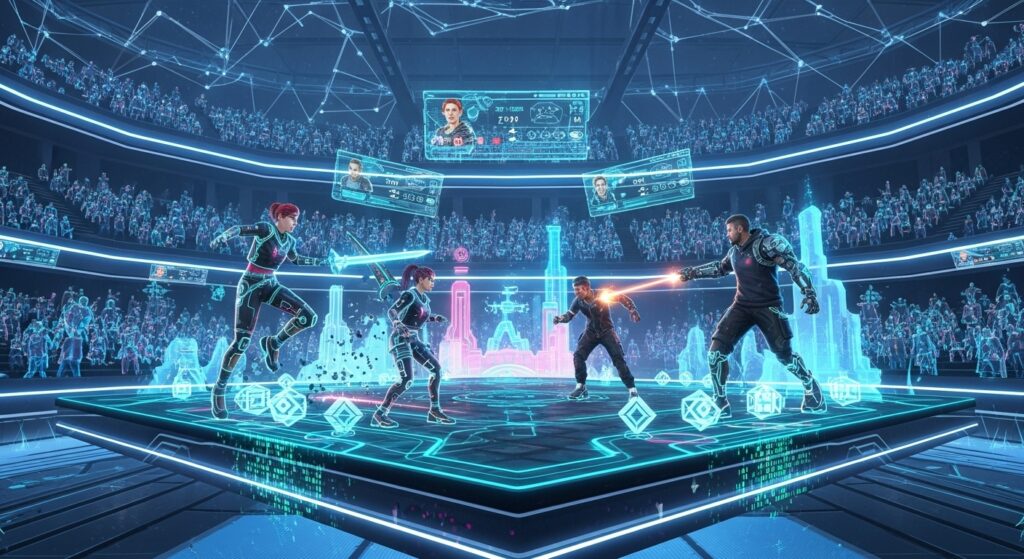
Not too long ago, video games were dismissed as a casual pastime, something for teenagers to fill their afternoons with. Today, they are at the heart of a multibillion-dollar industry known as Esports—a global spectacle of competition, technology, and culture. The rise of Esports has changed not just how people play but how they connect, communicate, and even define success. What began in small LAN rooms and basements has transformed into packed arenas, sponsorship deals, and worldwide fame.
In this post, we’ll explore how Esports evolved, what drives its enormous popularity, how it has influenced technology and culture, and where it might go next. Whether you’re a dedicated gamer, a casual observer, or simply curious about why Esports keeps popping up in business news, this deep dive will give you a full picture of what makes it one of the defining industries of our time.
The Humble Beginnings of Competitive Gaming
Esports didn’t start with high-definition graphics or live-streamed tournaments. The first sparks of competition date back to the 1970s, when video games were still in their infancy. In 1972, students at Stanford University organized one of the earliest recorded gaming competitions, playing “Spacewar!” The prize? A year’s subscription to Rolling Stone magazine.
It might sound modest compared to today’s million-dollar prize pools, but it marked a significant shift—people were beginning to treat gaming as more than entertainment. Throughout the 1980s, arcades became social hubs. Games like Pac-Man and Donkey Kong encouraged players to chase high scores, while early console titles inspired the first generation of competitive gamers.
The 1990s pushed things even further. Titles like Street Fighter II and StarCraft turned competition into a serious pursuit. LAN parties—where gamers connected their computers to play locally—brought communities together. For many, those gatherings were the birthplace of Esports spirit: a blend of skill, camaraderie, and pride.
The 2000s: The Rise of Online Connectivity
The arrival of the internet changed everything. Suddenly, gamers didn’t have to be in the same room—or even the same continent—to compete. Online multiplayer games like Counter-Strike, Warcraft III, and Halo took the competitive scene global.
Professional tournaments began appearing more frequently, supported by companies eager to tap into this growing market. South Korea led the charge. By the early 2000s, the country had transformed gaming into a cultural movement, with dedicated Esports channels broadcasting matches nationwide. Games like StarCraft became national obsessions, and players were treated like celebrities.
Other regions soon followed. The U.S., Europe, and China developed their own leagues, forming the early ecosystem of global Esports. Around this time, organizations like Major League Gaming (MLG) and Electronic Sports World Cup (ESWC) began hosting structured tournaments, setting standards that would later shape how Esports events were run worldwide.
Streaming Platforms: The Game Changer
If the 2000s built the foundation, the 2010s launched Esports into the stratosphere. The secret ingredient? Streaming.
Platforms like Twitch and YouTube Gaming allowed fans to watch live matches from anywhere in the world. Suddenly, Esports wasn’t limited to the attendees in an arena—it was accessible to millions at home. Watching a game became an event, not unlike tuning in to a football match.
Streaming gave players exposure and provided fans with a sense of community. Viewers could interact in real time, cheer for their favorite teams, and even learn from professionals. It wasn’t long before streamers became influencers, earning substantial incomes from sponsorships and viewer donations.
At the same time, major game developers recognized the power of Esports to keep their games alive and relevant. Titles like League of Legends, Dota 2, and Overwatch were designed with competitive balance in mind, ensuring fairness and excitement for both players and spectators.
Esports as a Career
For decades, the idea of becoming a “professional gamer” seemed unrealistic. Parents often told their kids to focus on traditional careers, not video games. But the 2010s proved that gaming could indeed pay the bills—and then some.
Top players began earning six-figure salaries, with sponsorships, streaming revenue, and tournament winnings boosting their income. Teams like Fnatic, Cloud9, and Team Liquid grew into global organizations with training facilities, coaching staff, and analysts—mirroring the structure of traditional sports teams.
Universities and colleges started offering Esports scholarships. High schools built Esports clubs. Even the U.S. military began using competitive gaming as a recruitment and morale-building tool.
Behind the scenes, entire industries formed around Esports—marketing, broadcasting, merchandise, event production, and analytics. It became clear that Esports wasn’t a fad; it was an ecosystem.
The Cultural Influence of Esports
Esports isn’t just about competition—it’s about community. Millions of fans tune in not only to watch games but to share in the experience. The chat sections of live streams buzz with excitement, memes, and commentary.
This cultural side of Esports has blurred the lines between gaming and mainstream entertainment. Celebrities, musicians, and athletes regularly collaborate with gaming organizations or invest in teams. Drake, Post Malone, and Michael Jordan have all backed Esports ventures.
The crossover appeal doesn’t stop there. Game soundtracks have become chart-toppers. Virtual concerts and digital arenas have expanded how entertainment is defined. In some cases, Esports even merges with fashion—luxury brands have collaborated with game developers to create virtual clothing and real-world merchandise inspired by in-game aesthetics.
The Economics Behind Esports
Money drives growth, and Esports is no exception. In 2024, the global Esports market surpassed the $2 billion mark in revenue, with forecasts suggesting even greater expansion.
Revenue streams are diverse—sponsorships, advertising, ticket sales, streaming rights, and merchandise all contribute to the industry’s financial health. Companies like Intel, Red Bull, and Nike invest heavily in sponsorships, recognizing the immense exposure Esports provides.
Prize pools for major tournaments are now staggering. Dota 2’s “The International” regularly boasts tens of millions in total prizes, much of it crowdfunded by fans. League of Legends Worlds finals sell out stadiums, generating both physical and digital revenue.
This commercial success has also brought new challenges, from player burnout to regulation issues. As money pours in, maintaining integrity and fair play becomes even more essential.
The Role of Technology
Esports thrives on technology, and in turn, drives technological advancement. From gaming PCs with ultra-fast refresh rates to high-speed internet infrastructure, the demands of Esports have pushed innovation forward.
Streaming technology has improved dramatically to support millions of simultaneous viewers without lag. Augmented reality and virtual reality are slowly making their way into tournaments, offering immersive viewing experiences.
Even artificial intelligence plays a part—AI is used to analyze gameplay, detect cheating, and optimize training regimens. Coaches can now track player performance down to minute reaction times and decision patterns.
The synergy between Esports and technology has made it one of the most future-ready industries in the world.
The Global Reach
Esports is one of the few forms of entertainment that truly transcends geography. From Seoul to Los Angeles, from Shanghai to Berlin, fans tune in to watch the same matches, cheer for the same teams, and discuss the same strategies.
Asia remains a powerhouse, particularly South Korea and China, where Esports is often treated with the same reverence as traditional sports. Europe and North America have caught up, building their own professional leagues and investing heavily in infrastructure.
Emerging regions like the Middle East, Latin America, and Africa are now stepping into the spotlight as well. Internet accessibility and mobile gaming have opened new doors for millions of players who might never have touched a gaming console before.
Challenges in the Industry
Despite its success, Esports faces several hurdles. Player burnout is a significant concern—top competitors train for long hours under immense pressure, often leading to physical and mental strain.
Toxicity in online communities also remains an issue. While Esports has a vast and passionate fan base, some corners of gaming culture still struggle with inclusivity and respect.
Financial stability can also be unpredictable. Not every team or tournament is profitable, and many smaller organizations struggle to secure long-term sponsorships. The market’s rapid expansion sometimes outpaces sustainable planning.
Regulation is another gray area. Unlike traditional sports governed by established bodies, Esports lacks a unified global authority. Rules, player contracts, and even doping policies vary widely between games and regions.
Esports and Education
Esports is now finding its place in the classroom. Schools and universities around the world are incorporating gaming into their extracurricular and academic programs.
Beyond scholarships, educators are recognizing the value of Esports in developing teamwork, communication, and strategic thinking. Game design and Esports management have become legitimate academic fields, preparing students for a growing job market that spans event planning, broadcasting, coaching, and marketing.
Esports has even influenced how people approach learning itself. Gamified education—where learning adopts the structure and motivation of games—has proven to improve engagement and retention.
The Role of Women in Esports
For many years, Esports was seen as a male-dominated space. However, the narrative is shifting. More women are entering the scene as players, casters, managers, and executives.
Organizations and tournaments dedicated to women in gaming, such as Valorant Game Changers and ESL Impact, are helping balance representation. These initiatives create safe, competitive environments while also highlighting the immense talent among female gamers.
The inclusion movement has sparked broader conversations about respect, representation, and equal opportunity in digital spaces. As visibility grows, it’s likely that the next generation of Esports stars will be more diverse than ever before.
Esports and Traditional Sports
For a long time, traditional sports organizations dismissed gaming as a fad. Now, they’re investing in it. Football clubs like Manchester City, PSG, and Real Madrid have official Esports divisions. The NBA runs its own NBA 2K League.
The overlap between Esports and traditional sports fans is growing, as both share a love for competition, storytelling, and community. Some even argue that Esports represents the evolution of sports—where physical and digital worlds merge.
Moreover, Esports has proven resilient in ways traditional sports sometimes can’t be. During global lockdowns, while stadiums went quiet, Esports continued to thrive online, keeping fans entertained and connected.
The Future of Esports
So where does Esports go from here? The future looks bright and full of possibilities. As technology continues to evolve, so too will the experience of watching and playing.
Virtual and augmented reality could redefine spectating, allowing fans to “step” into matches. Blockchain and digital collectibles may reshape how fans interact with teams, buy merchandise, or support players.
There’s also a growing interest in mobile Esports, particularly in developing regions where smartphones are more accessible than gaming PCs. Titles like Mobile Legends, PUBG Mobile, and Free Fire have turned into global phenomena with their own professional scenes.
Eventually, Esports may even find its place in the Olympics. The International Olympic Committee has already experimented with Esports events alongside traditional games, signaling that the world’s oldest sporting institution is paying attention.
Why Esports Matters
Beyond entertainment, Esports matters because it represents a new kind of cultural revolution. It brings together people across borders, languages, and generations. It demonstrates how technology can foster community instead of isolation.
Esports also challenges traditional ideas of success. It proves that digital skills can have tangible value, that creativity and strategic thinking are as worthy of recognition as physical athleticism.
For younger generations, it’s a gateway to opportunity—a space where passion, dedication, and innovation can turn dreams into careers.
Conclusion
The story of Esports is still being written. What began as a few friends competing for bragging rights has evolved into one of the world’s most dynamic industries. It combines the thrill of competition with the connectivity of the digital age, reshaping culture, technology, and business along the way.
As it continues to grow, Esports isn’t just changing how we play—it’s changing how we see the world.