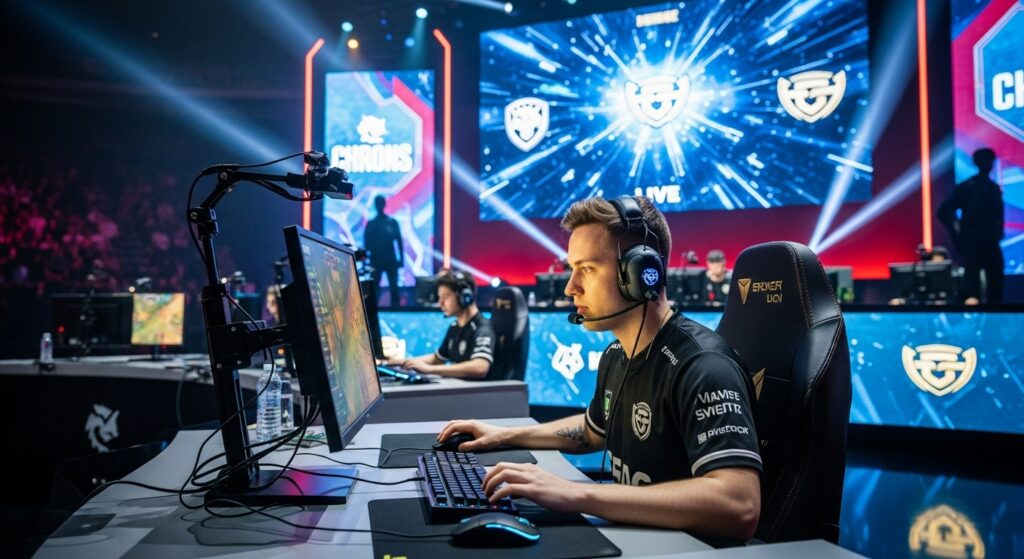
Esports, or competitive video gaming, has emerged as one of the most exciting phenomena in modern entertainment. What began as informal gaming competitions among friends has transformed into a global industry worth billions of dollars. Professional teams, large-scale tournaments, and millions of fans now define the esports ecosystem. Unlike traditional gaming, esports emphasizes skill, strategy, teamwork, and mental fortitude, creating a unique form of competition that rivals mainstream sports. Its rise demonstrates how technology, media, and culture intersect to create new opportunities and redefine what it means to compete.
The Origins of Esports
The origins of esports trace back to the late 1970s and early 1980s when arcade competitions and video game tournaments first gained popularity. Games like Pong, Space Invaders, and Pac-Man were among the earliest to inspire organized competitions. One of the first major events was the Space Invaders Championship in 1980, which attracted thousands of players in the United States. During the 1990s, games such as StarCraft, Warcraft, and Counter-Strike fostered competitive communities, particularly in South Korea and parts of Europe. These early tournaments, often held at local gaming centers or LAN parties, laid the foundation for the professional esports scene by showing that competitive gaming could captivate audiences and generate excitement.
The Emergence of Professional Gaming
The 2000s marked a turning point for esports as high-speed internet, advanced hardware, and online multiplayer games enabled global competition. Titles like League of Legends, Dota 2, and Call of Duty became central to competitive gaming, offering structured leagues, rankings, and prize pools. Professional esports organizations emerged, recruiting skilled players, providing training facilities, and securing sponsorship deals. Streaming platforms allowed fans to watch live matches, transforming esports into an interactive spectacle. With the rise of global tournaments and professional teams, esports began to resemble traditional sports, complete with coaches, analysts, and passionate fanbases.
Technology as the Backbone of Esports
Technology is the driving force behind the esports industry. High-speed internet enables real-time multiplayer competition across continents. Advanced gaming computers, monitors, and peripherals provide the precision necessary for professional gameplay. Streaming platforms allow millions of viewers to watch matches live, interact with players, and follow their favorite teams. Data analytics and performance monitoring software help teams develop strategies, study opponents, and improve individual skill. Without these technological advancements, the esports industry could not have scaled to its current global reach and sophistication.
The Variety of Competitive Games
Esports encompasses a diverse range of game genres, each requiring different skills and strategies. Multiplayer online battle arena (MOBA) games like League of Legends and Dota 2 focus on teamwork, strategy, and real-time decision-making. First-person shooters such as Counter-Strike and Overwatch emphasize reflexes, aiming accuracy, and situational awareness. Fighting games, sports simulations, and card games like Hearthstone also have dedicated competitive scenes. This diversity ensures that esports appeals to a wide audience, allowing fans and players to find games that match their interests and skills while supporting multiple subcultures within the broader esports community.
Esports as a Spectator Sport
Esports has become an entertainment medium that rivals traditional sports. Major tournaments are held in arenas with thousands of spectators while millions more watch online. High production values, including commentary, instant replays, and player analysis, enhance the viewing experience. Fans passionately follow their favorite teams and players, and online platforms allow interactive engagement during live matches. Unlike traditional sports, esports can reach a global audience instantly, creating communities that transcend geographic boundaries. The spectator aspect of esports has turned gaming into an immersive, participatory form of entertainment.
Economic Impact of Esports
Esports is now a multi-billion-dollar industry. Revenue streams include tournament prize pools, sponsorships, advertising, media rights, and merchandise sales. Major brands sponsor teams and events, targeting highly engaged audiences of young, digitally active consumers. Professional players earn salaries, streaming revenue, and sponsorship deals, while organizations generate income from merchandising and event ticket sales. This economic ecosystem mirrors traditional sports but is uniquely tailored to the digital and interactive nature of esports. The financial growth of esports demonstrates that gaming has evolved from a recreational pastime into a legitimate professional and commercial enterprise.
Training and Professionalism
Professional esports players train with the rigor of elite athletes. Practice sessions often span several hours per day, focusing on strategy, teamwork, reflexes, and communication. Teams employ coaches, analysts, and even psychologists to optimize player performance and maintain mental well-being. Discipline, focus, and resilience are critical, as players must perform consistently under pressure. Esports organizations invest in structured training programs, ensuring players are equipped to compete at the highest level. This professionalism has elevated esports, demonstrating that competitive gaming requires both skill and strategy comparable to traditional sports.
Global Influence and Reach
Esports has a truly global presence, with significant influence in North America, Europe, and Asia. Countries like South Korea, China, and the United States lead in both talent and tournament organization. International events, such as The International for Dota 2 and the League of Legends World Championship, attract millions of viewers and offer multimillion-dollar prize pools. Esports transcends borders, connecting players and fans worldwide through shared passion and digital platforms. Its international appeal highlights the universal nature of competitive gaming and its ability to foster cross-cultural communities.
Esports and Youth Culture
Esports resonates strongly with younger generations who have grown up in the digital era. It offers social interaction, skill development, and a sense of identity. Online forums, gaming clubs, and streaming channels provide spaces for fans to engage, learn, and share experiences. Esports has also influenced broader youth culture, including fashion, lifestyle trends, and entertainment preferences. For many young people, competitive gaming is not just a hobby but a potential career path, inspiring dedication and strategic thinking. Esports encourages teamwork, problem-solving, and discipline—skills that extend beyond gaming into everyday life.
Challenges Facing the Industry
Despite its growth, esports faces several challenges. Player burnout and mental health issues are common due to long practice hours and the pressure to perform. Cheating, hacking, and unfair play threaten the integrity of competitions. Inclusivity and diversity remain issues, as certain groups are underrepresented in professional gaming. Additionally, regulatory frameworks are still evolving, leading to inconsistencies in tournament rules, contracts, and player protections. Addressing these challenges is essential to ensure the long-term sustainability and credibility of esports as both a competitive and entertainment medium.
The Future of Esports
The future of esports is full of potential. Virtual reality and augmented reality may redefine immersive competition, creating new ways for players and fans to interact. Artificial intelligence could enhance training, strategy, and game design, further professionalizing the industry. Esports may increasingly integrate with mainstream media, appearing on television networks or collaborating with traditional sports leagues. Educational initiatives, including esports scholarships and university teams, are growing worldwide, making competitive gaming a legitimate academic and career pursuit. With technological advancement and global interest, esports is poised to expand even further, reaching new audiences and opportunities.
Esports Beyond the Game
Esports is more than just competition—it has cultural, economic, and educational significance. Streaming, commentary, content creation, and tournament production offer career paths beyond professional play. Universities and schools are incorporating esports programs to teach teamwork, strategy, digital literacy, and communication skills. Sponsorships, merchandising, and media partnerships extend the impact of esports into mainstream culture. Its influence demonstrates that competitive gaming is not just a niche hobby but a transformative digital and social movement with broad implications.
Conclusion: Esports as a Cultural and Competitive Force
Esports has redefined what it means to compete and entertain in the digital era. From its early beginnings in local tournaments to massive international events, it combines skill, strategy, teamwork, and entertainment on a global scale. The industry offers professional opportunities, cultural influence, and a sense of community for players and fans alike. While challenges such as burnout, regulation, and inclusivity remain, the growth of esports demonstrates its lasting impact on entertainment, technology, and youth culture. Esports is more than a game—it is a digital arena where talent, dedication, and strategy meet, shaping the future of competitive entertainment worldwide.