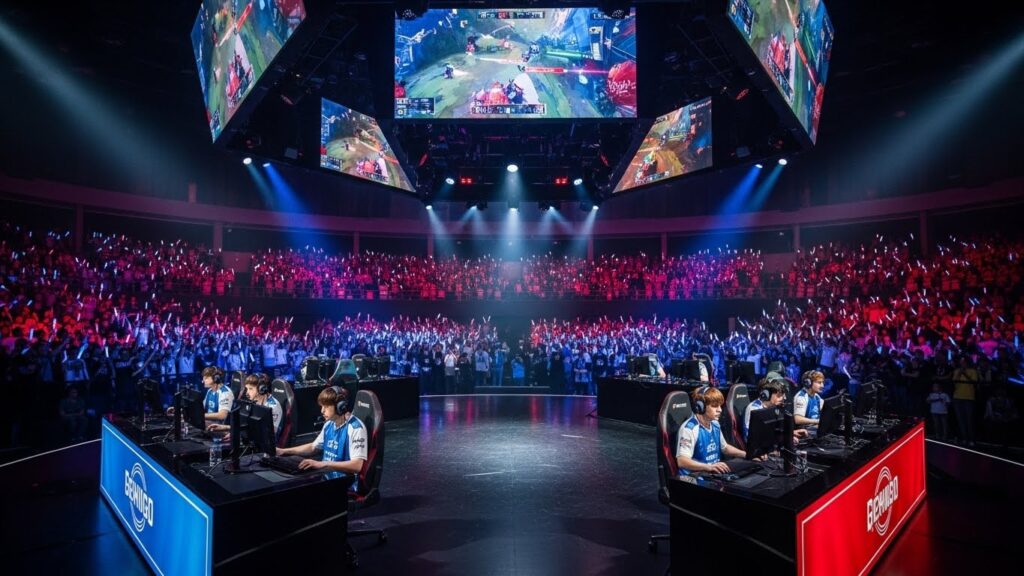
Esports has grown from a niche hobby into a global phenomenon that rivals traditional sports in popularity and cultural impact. Once considered a pastime limited to bedrooms and internet cafés, esports now boasts professional leagues, million-dollar tournaments, and audiences that span the globe. It is a unique fusion of skill, strategy, technology, and entertainment, and it has redefined the way we perceive competition and community in the digital age. This blog explores the evolution of esports, its societal and economic impact, and the opportunities it offers for players and fans alike.
The Early Beginnings of Competitive Gaming
The history of esports traces back to the earliest days of video gaming. In the 1970s and 1980s, competitive gaming emerged in arcades, where players competed for high scores on games like Pac-Man, Space Invaders, and Donkey Kong. These competitions were informal and often localized, but they established the first sense of rivalry and achievement in gaming.
The 1990s marked a pivotal period as personal computers and early network technologies allowed players to connect online. Games such as Quake, StarCraft, and Counter-Strike enabled competitive play across regions and even countries. Online communities began forming around these games, sharing strategies, organizing tournaments, and creating the foundations of what would become the esports ecosystem.
The Growth of Esports into a Global Industry
Esports’ rise to prominence accelerated in the 2000s, fueled by the growth of online gaming platforms and the professionalization of competitive leagues. Game developers began designing titles with competitive play in mind, emphasizing balance, strategy, and spectator appeal. Popular games such as League of Legends, Dota 2, Fortnite, and Valorant became the centerpiece of international tournaments.
Professional esports players emerged as celebrities in their own right, signing contracts with teams, receiving sponsorships, and competing in multi-million-dollar tournaments. Events like the League of Legends World Championship and The International for Dota 2 now fill stadiums and attract millions of online viewers, demonstrating that esports has become a mainstream form of entertainment with global influence.
Understanding the Esports Ecosystem
Esports is far more than individual players competing in video games. It is a vast ecosystem that includes players, teams, coaches, analysts, sponsors, broadcasters, tournament organizers, and fans. Teams operate like professional sports organizations, employing support staff to optimize performance, analyze data, and maintain player well-being.
Game developers ensure the integrity of competitions by balancing gameplay, preventing cheating, and updating content to keep the competitive environment dynamic. Tournament organizers handle everything from logistics to event production, creating immersive experiences for live audiences and online viewers. Fans contribute to the culture of esports, engaging through social media, live streams, and in-game communities. Together, these elements form a robust structure that supports the professionalization and sustainability of esports.
The Skill, Strategy, and Training Behind Esports
Competitive gaming demands a combination of skill, strategy, and discipline. Professional players practice for hours each day to refine mechanics, decision-making, and team coordination. Quick reflexes, precise hand-eye coordination, and tactical thinking are essential to outperform opponents in high-stakes matches.
Team-based esports titles require strong communication and collaboration. Players must adapt to rapidly changing game scenarios, coordinate roles, and execute strategies with split-second timing. Mental preparation is equally critical, as the pressure of competition and the presence of large audiences test focus and resilience. Esports training is methodical and rigorous, blending elements of physical endurance, cognitive agility, and psychological strength.
Physical and Mental Health Considerations in Esports
Contrary to the stereotype of esports players as sedentary individuals, physical health plays a significant role in competitive performance. Players often maintain exercise routines to enhance stamina, reaction speed, and posture. Proper nutrition and sufficient rest are also critical to sustaining peak performance during long hours of practice and tournaments.
Mental health is a growing concern in the esports community. High-pressure environments, rigorous schedules, and public scrutiny can lead to stress, anxiety, and burnout. Many professional teams now provide mental health support, including counseling, mindfulness training, and structured breaks, recognizing that psychological well-being is vital for sustainable performance and career longevity.
The Social and Cultural Impact of Esports
Esports has transcended its digital roots to become a cultural phenomenon. Online platforms and social media enable fans to connect with players, discuss strategies, and participate in global communities. These interactions foster a sense of belonging and shared identity among gamers, often bridging geographic, linguistic, and cultural divides.
For younger generations, esports provides role models and opportunities to pursue creative, technical, and professional aspirations. It also promotes inclusivity, as digital competition does not discriminate based on gender, physical ability, or background. Communities within esports celebrate innovation, diversity, and collaboration, reflecting the values of an increasingly connected and digital society.
Career Opportunities Beyond Playing
While professional players often receive the spotlight, esports offers a wide range of career paths beyond competitive play. Roles in coaching, event management, broadcasting, content creation, marketing, and game development are in high demand. Educational institutions have even begun offering specialized programs in esports management, production, and technology.
These career opportunities demonstrate that esports is a multifaceted industry capable of sustaining professional growth for individuals with diverse skill sets. It is no longer just a hobby or a dream; it is a viable field offering long-term professional and economic potential.
Economic Influence of Esports
Esports has evolved into a major economic engine, generating billions of dollars in revenue worldwide. Sponsorships, advertising, streaming subscriptions, merchandise, and live events contribute significantly to the industry’s growth. Large-scale tournaments stimulate local economies by attracting tourism, promoting hospitality, and creating employment opportunities.
Investments from major corporations, media companies, and technology firms continue to expand the infrastructure and reach of esports. The financial success of the industry has also driven innovation, leading to enhanced event production, improved player support, and the creation of professional leagues and academies.
Women in Esports and the Push for Inclusivity
Women are increasingly shaping the esports landscape, breaking barriers and gaining recognition as players, coaches, and industry leaders. Initiatives promoting female participation and mixed-gender competition are growing, fostering diversity and challenging long-standing stereotypes.
Increased representation matters not only for fairness but also for inspiring the next generation. By highlighting skill and dedication over gender, esports is moving toward a more inclusive environment that values talent, innovation, and teamwork above all else.
Technology Driving the Future of Esports
Technology is at the core of esports. High-performance gaming hardware, advanced streaming platforms, and real-time analytics have elevated both player performance and fan engagement. Innovations in virtual reality, augmented reality, and cloud gaming are poised to redefine competitive experiences and expand accessibility.
Data-driven strategies allow teams to analyze gameplay, optimize tactics, and enhance training. Technology ensures that esports remains a dynamic, evolving industry, constantly redefining the boundaries of digital competition and entertainment.
The Future of Esports
The future of esports is promising, with continued expansion in both audience and geographic reach. Emerging technologies, investment in infrastructure, and integration with traditional sports will create hybrid experiences and attract diverse audiences. Sustainability and mental health considerations will increasingly influence professional standards.
Esports is expected to maintain its cultural, social, and economic impact, offering opportunities for players, creators, and communities worldwide. It is becoming an enduring part of global entertainment, education, and professional development.
Conclusion
Esports has transformed from a niche hobby into a global force that reshapes how we understand competition, community, and culture. It is a complex ecosystem where skill, strategy, technology, and creativity converge. Beyond entertainment, esports offers career opportunities, promotes inclusivity, and fosters social connection on a global scale.
As the industry continues to innovate and expand, esports will remain a defining aspect of digital culture. It is more than a game; it is a platform for personal growth, professional achievement, and collective experience. The rise of digital gladiators demonstrates that the power of competition transcends the physical world, creating new arenas for human ambition and achievement.