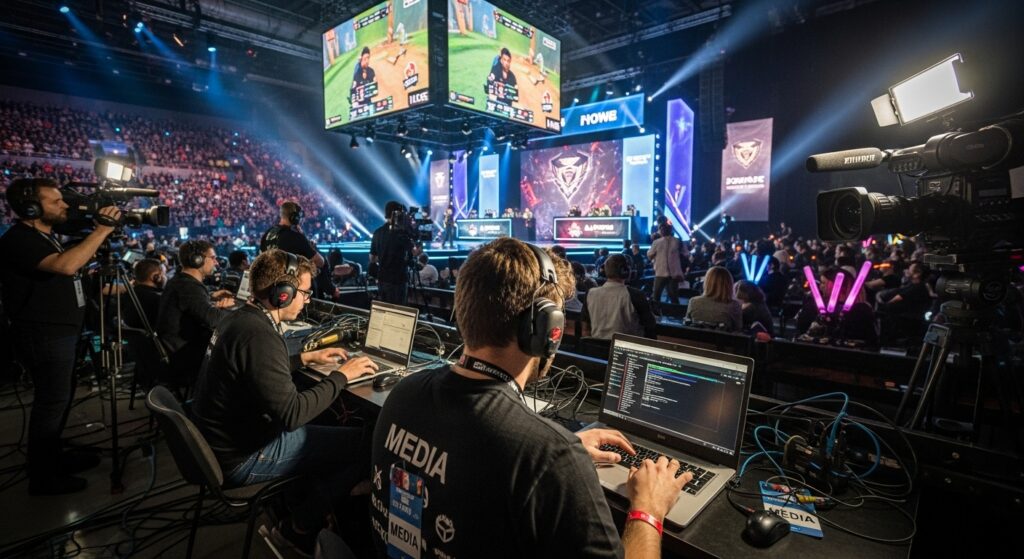
Introduction
Esports journalism is a rapidly growing field, providing news, analysis, and stories about tournaments, players, and industry trends. Professional coverage enhances fan experience, drives engagement, and supports industry growth.
This blog explores esports journalism, reporting strategies, platforms, challenges, and future opportunities.
Importance of Esports Journalism
- Keeps fans informed about tournaments, results, and player achievements.
- Highlights emerging talent and industry developments.
- Provides analysis and insights into game strategies and trends.
- Supports transparency and credibility within the esports community.
Types of Esports Journalism
- News Reporting: Coverage of tournament outcomes, player transfers, and announcements.
- Feature Stories: In-depth profiles of players, teams, and organizations.
- Analysis & Commentary: Strategic breakdowns and meta insights.
- Opinion & Editorials: Industry trends, debates, and fan perspectives.
- Video & Podcast Content: Multimedia reporting for immersive storytelling.
Platforms for Esports Journalism
- Online magazines and websites (Dexerto, ESPN Esports, The Esports Observer).
- Social media channels for breaking news and fan interaction.
- Video platforms for live commentary and analysis.
- Podcasts for interviews, insights, and community discussions.
Reporting Strategies
- Timely and accurate coverage of tournaments and events.
- Access to players, teams, and organizers for exclusive stories.
- Data-driven analysis using match statistics and performance metrics.
- Engagement through interactive polls, Q&A, and fan feedback.
Challenges
- Rapidly changing game updates and meta.
- Verifying accuracy in a fast-paced industry.
- Competition from fan-generated content and social media.
- Balancing in-depth reporting with audience interest.
Future Trends
- AI-assisted reporting for match summaries and data analysis.
- Interactive multimedia storytelling with VR/AR experiences.
- Global coverage connecting regional esports communities.
- Increased collaboration with teams, tournaments, and streaming platforms.