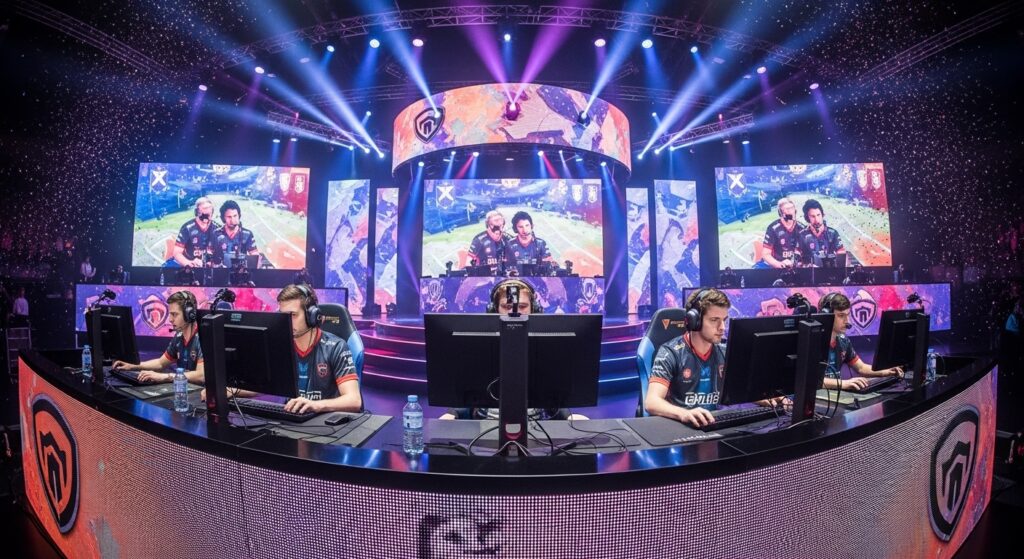
Over the past two decades, eSports has transformed from a niche hobby to a global cultural phenomenon. What started as casual competitions among friends has now evolved into a multibillion-dollar industry, with professional players, massive tournaments, and a global fan base. Competitive gaming, once thought of as a fringe activity, has now firmly embedded itself in the mainstream. Whether it’s watching a thrilling League of Legends championship, tuning into a Counter-Strike: Global Offensive match, or following the growth of new games like Valorant, eSports has become an entertainment juggernaut that rivals traditional sports in both audience and revenue.
In this blog post, we will explore the rise of eSports, its core elements, and what makes it so captivating. We will also examine the impact eSports has on the world of entertainment and sports, its influence on social interaction, and its future in an ever-evolving digital landscape.
The Early Days of Competitive Gaming
To understand how eSports became a global spectacle, we need to look back at its origins. Competitive gaming dates back to the early 1970s when the first video game tournaments were held. The most notable example is the Spacewar tournament, held at Stanford University in 1972, which is often considered one of the first video game competitions. However, it wasn’t until the 1990s that the eSports scene began to form more clearly.
With the arrival of the internet and local area networks (LANs), players were able to compete online from the comfort of their homes. This helped give birth to the concept of multiplayer online gaming, and games like Quake and StarCraft became central to early eSports tournaments. These games laid the foundation for competitive gaming and showed that there was a serious demand for organized, high-stakes competitions.
The early 2000s saw the rise of major international tournaments like the World Cyber Games (WCG) and the Electronic Sports World Cup (ESWC). These events were the first to gather large numbers of professional players from across the globe, and they helped to establish eSports as a legitimate competition. StarCraft and Warcraft III were pivotal in this development, attracting millions of viewers, particularly in South Korea, where the eSports scene gained significant traction.
The Growth of Streaming: Twitch and the Global Audience
While traditional sports are often watched live in stadiums, the birth of online streaming allowed eSports to reach audiences across the world. The launch of Twitch in 2011 was a game-changer for the industry. For the first time, fans could tune into live broadcasts of eSports tournaments and watch professional gamers in action, no matter where they were located. Twitch provided a platform for gamers to stream their gameplay, interact with their audience, and share their strategies in real time. The connection between players and fans became more direct, and this helped to grow the eSports community even further.
As eSports gained more attention, companies began to notice its potential. Major gaming publishers and developers like Riot Games (the creators of League of Legends) and Blizzard Entertainment (the creators of Overwatch and StarCraft) began to invest heavily in creating tournaments, leagues, and broadcasting content. These companies took a more hands-on approach to the growth of competitive gaming, funding major events like the League of Legends World Championship, which now attracts millions of viewers and offers a prize pool of over $2 million.
Streaming platforms like YouTube Gaming and Facebook Gaming also began to push eSports further into the mainstream, helping to make competitive gaming more accessible. These platforms offered a wider reach, including mobile users, and helped to expand the global audience. As a result, eSports became not just a niche interest but a thriving global industry.
eSports: The Competitive Ecosystem
At its core, eSports is about competition. Players face off in video games that require a high level of skill, strategy, and teamwork. The most successful players are not just those who can click fast but those who have mastered the mechanics of the game, understand the nuances of strategy, and can perform under pressure.
There are several key components that make up the eSports ecosystem:
1. The Games: Diverse Genres and Titles
One of the key factors that has contributed to eSports’ growth is the diversity of games that are now played at a competitive level. Unlike traditional sports, where one game is the primary focus (such as football or basketball), eSports spans a wide range of genres. From first-person shooters (FPS) like Counter-Strike: Global Offensive and Call of Duty to multiplayer online battle arenas (MOBA) like Dota 2 and League of Legends, to real-time strategy (RTS) games like StarCraft II, there is a game for every type of competitive player.
Each game comes with its own set of rules, mechanics, and fan base, allowing players to specialize in different areas of competitive gaming. For example, League of Legends emphasizes strategy and teamwork, while Counter-Strike focuses more on individual skill and precision. The diversity of genres ensures that eSports remains exciting and dynamic, with players constantly switching between different titles and challenges.
2. The Players: The New Athletes
Professional eSports players have become the new athletes of the digital age. Unlike traditional athletes, who must focus on physical training, eSports professionals must hone their gaming skills, maintain peak mental focus, and work on strategies with their teams. Many players start their journey as teenagers, grinding away at their games, participating in amateur tournaments, and eventually making a name for themselves in the competitive scene.
eSports players often train for hours each day, focusing on improving their reflexes, communication skills, and game knowledge. Mental and physical endurance are crucial, as tournaments can last for hours, and players must remain sharp and strategic under high pressure.
Top-tier eSports players often gain celebrity status, with huge followings on platforms like Twitch and YouTube. Some of the most successful players have even built their own brands, collaborating with sponsors, streaming content, and participating in promotional activities. With millions of fans worldwide, professional players now have the same level of recognition as traditional sports stars.
3. The Teams: Collaboration and Strategy
In many eSports titles, teams are just as important as individual players. In games like League of Legends, Overwatch, and Dota 2, teams of players must work together to execute complex strategies, communicate effectively, and support each other during high-pressure moments. These team dynamics are critical to success, and many eSports organizations have invested heavily in recruiting the best talent and creating the right environment for team synergy.
Professional teams are more than just groups of players. They often have coaches, analysts, managers, and other staff who work to improve the performance of the team. Just like traditional sports teams, eSports organizations operate with a focus on strategy, growth, and long-term success. These organizations also create strong brand identities and cultivate loyal fan bases, further fueling the expansion of the eSports ecosystem.
4. The Tournaments: Spectacle and Entertainment
The thrill of eSports is not just in the gameplay; it’s in the spectacle of the tournaments themselves. Major eSports events, such as the League of Legends World Championship, The International (Dota 2), and Overwatch League, are some of the most-watched live events in the world, attracting millions of viewers both online and in-person. These tournaments are more than just competitions—they are entertainment spectacles.
In addition to the high-level competition, eSports tournaments are known for their elaborate stage designs, live commentary, and production quality. Fans can watch the matches unfold from various angles, with commentators providing analysis and insight into the gameplay. These tournaments are broadcast on live-streaming platforms, cable TV, and even on big screens in packed arenas.
For fans, attending a live event or tuning into a stream feels similar to attending a sports game, complete with excitement, drama, and a sense of community. The global nature of eSports means that fans from all over the world can participate in the excitement, cheering for their favorite teams and players.
The Business of eSports: Sponsorships, Revenue, and Investment
As eSports continues to grow, so does its economic impact. The industry has become a significant player in the entertainment sector, attracting investments from major companies, including tech giants, sports franchises, and traditional media outlets. eSports organizations secure sponsorships from global brands, which help fund teams, tournaments, and infrastructure.
Revenue in eSports comes from a variety of sources, including:
- Sponsorships and advertising: Brands like Intel, Coca-Cola, and Nike have partnered with eSports organizations and players to tap into the growing fanbase.
- Ticket sales and event merchandise: Live events like the League of Legends World Championship sell out arenas, and fans purchase tickets, merchandise, and exclusive content.
- Streaming platforms: Services like Twitch and YouTube Gaming generate revenue through ads, subscriptions, and donations from viewers.
- Prize money: Top-tier eSports players and teams can earn millions in prize money, making eSports a lucrative career for the best of the best.
The success of eSports has also attracted investment from traditional sports franchises, who see the potential for cross-promotion and expanded viewership. Companies are now investing heavily in eSports infrastructure, further professionalizing the industry.