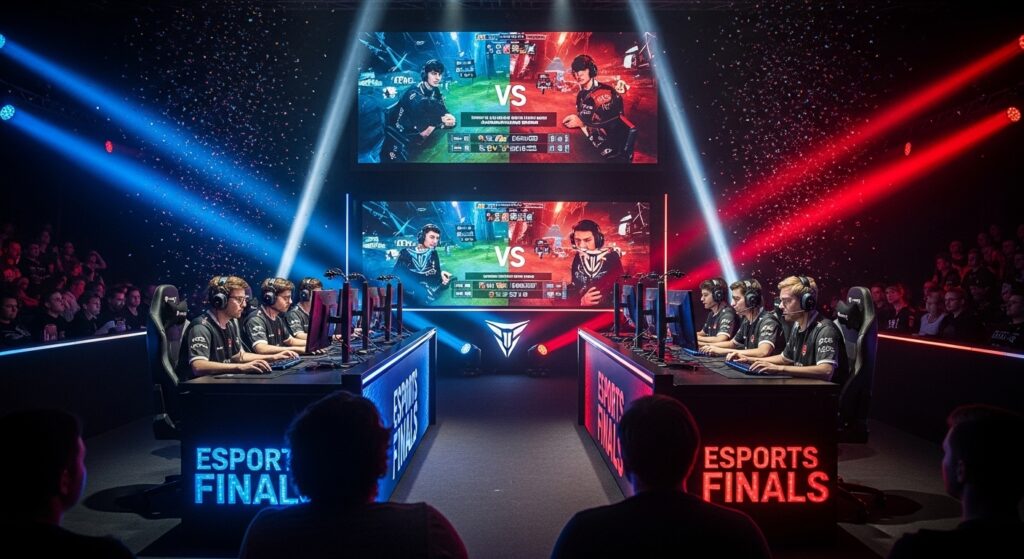
In recent years, esports has experienced a surge in popularity, evolving from a niche hobby into a billion-dollar global industry. Competitive gaming, once regarded as a pastime for a select group of gamers, has now captivated millions of fans worldwide. Esports has not only transformed how people view gaming but has also redefined what it means to be a professional athlete in the 21st century. The rise of esports has led to the creation of professional leagues, lucrative sponsorships, and a growing culture of dedicated fans. In this blog, we’ll explore the fascinating rise of esports, its impact on culture, the future of competitive gaming, and why it’s become a force to be reckoned with in the entertainment world.
The Beginnings of Esports: A Humble Start
The story of esports begins long before it became a global phenomenon. In the early days of gaming, competitions were small and informal, with people gathering at local arcades or homes to compete in games like Pong and Space Invaders. As gaming technology progressed, particularly with the advent of multiplayer games in the 1990s, competitive gaming began to take shape.
One of the first major milestones in esports came in 1997, when the Red Annihilation Tournament for Quake was held. This tournament is often considered the first real esports competition, attracting players from all over the world. While these early events were modest in scale, they set the groundwork for what was to come. Soon after, organizations like the Cyberathlete Professional League (CPL) and the World Cyber Games (WCG) began hosting international tournaments, offering cash prizes and fostering the first professional gaming scenes.
During this period, games like StarCraft and Warcraft also started to draw competitive players from across the globe, helping establish a competitive gaming culture. These early tournaments, often streamed or broadcasted on television, captured the attention of both gamers and casual viewers, hinting at the potential esports had to become something much larger.
The Growth of Esports: From Niche to Mainstream
The real turning point for esports came in the mid-2000s, when games like League of Legends, Dota 2, and Counter-Strike: Global Offensive hit the market. These titles introduced deep mechanics, team-based strategies, and intricate gameplay that allowed players to showcase a wide range of skills. More importantly, these games became the backbone of the esports ecosystem, laying the foundation for today’s professional leagues and events.
The rise of live streaming platforms, particularly Twitch, which was launched in 2011, had a profound impact on the esports scene. Twitch allowed gamers to broadcast their gameplay to a global audience, enabling viewers to watch their favorite players and teams in real-time. This was a game-changer, as it opened up esports to a larger and more diverse audience. Fans could now follow tournaments from the comfort of their own homes, engage with players, and become part of an ever-expanding community.
As esports grew in popularity, more and more games began to embrace the competitive scene. Titles like Overwatch, Fortnite, and Valorant quickly established themselves as major players in the esports world, attracting massive player bases and sponsorships. Alongside this, the prize pools for major esports tournaments ballooned, with some events offering multi-million-dollar payouts. For example, The International for Dota 2 consistently offers one of the largest prize pools in esports, regularly exceeding $30 million.
Esports’ rise to prominence was also fueled by a new wave of corporate sponsorships. Brands such as Coca-Cola, Intel, and Red Bull saw the potential of esports and began to invest heavily in sponsorships, branding, and event production. These partnerships helped elevate the profile of esports, bringing it further into the mainstream.
The Emergence of Professional Esports Players
One of the most significant developments in esports has been the professionalization of gaming. In the early days of esports, players were often self-taught enthusiasts, competing in local tournaments for little more than bragging rights. Today, however, esports has become a legitimate career path for many young gamers, with players signing contracts with professional teams, receiving sponsorship deals, and earning a steady income from tournaments, streaming, and media appearances.
Professional esports players are similar to traditional athletes in many ways. They dedicate hours each day to practice, study gameplay, and improve their skills. Just like professional athletes in sports like basketball or football, esports players have coaches, analysts, and performance specialists who help them refine their game. Training for competitive gaming can be grueling, with players spending up to 12 hours a day practicing, strategizing, and refining their tactics.
Salaries for professional gamers vary, but some of the top players earn millions of dollars each year from prize money, sponsorships, and streaming revenue. For example, Johan “N0tail” Sundstein, a Dota 2 player, has earned more than $7 million in prize money alone, making him one of the highest-earning esports players in history. In addition to tournament earnings, many players also make substantial income through sponsorship deals, merchandise sales, and personal streaming channels.
Esports has also led to the rise of the “influencer” culture. Many professional players and content creators have leveraged their popularity on platforms like Twitch and YouTube to build massive personal brands. Streamers who are not necessarily professional players can still achieve significant success by entertaining audiences with their gameplay, commentary, and engaging personalities. These influencers often act as ambassadors for esports, helping to expand the industry’s reach and attract new fans.
The Global Appeal of Esports
One of the unique aspects of esports is its global reach. Unlike traditional sports, which are often confined by geographic boundaries and local fanbases, esports has a truly international audience. With games available on personal computers, consoles, and mobile devices, anyone with an internet connection can participate in or watch esports competitions, regardless of location.
Regions like South Korea, China, and the United States have become esports powerhouses, with highly competitive scenes and massive fanbases. South Korea, in particular, has long been a leader in esports, with games like StarCraft and League of Legends achieving near-national status. The country boasts state-of-the-art esports arenas, a well-established esports infrastructure, and an impressive history of success in international tournaments. The Korean e-Sports Association (KeSPA) has been instrumental in the growth of competitive gaming in the region, and Korean players continue to dominate many top-tier esports titles.
In China, esports is rapidly gaining traction, with games like Honor of Kings and League of Legends achieving massive player bases and fan followings. The Chinese government has even recognized esports as an official sport, encouraging investment and development in the esports industry. In 2019, China surpassed the United States as the largest esports market, and the country is expected to continue its rapid expansion in the coming years.
Esports is also booming in Europe and Latin America, where passionate fanbases support regional leagues and international competitions. The rise of mobile esports, particularly in Southeast Asia, has further expanded esports’ global reach, with titles like PUBG Mobile and Mobile Legends attracting millions of players in countries like Indonesia, Thailand, and India.
Esports and Traditional Sports: A New Intersection
While esports began as a distinct and separate form of entertainment, it is now increasingly intersecting with traditional sports. Many professional sports leagues and teams have recognized the potential of esports and have begun to invest in the industry.
In 2018, the NBA launched the NBA 2K League, a professional esports league based on the NBA 2K video game series. The league features NBA teams partnering with esports organizations to field virtual basketball players who compete in live, televised tournaments. Similarly, the NFL has partnered with EA Sports to create the Madden NFL Championship Series, which features competitive play in the Madden NFL video game.
These crossovers are not limited to the United States. European football clubs such as Paris Saint-Germain and Manchester City have also invested in esports teams and players, creating opportunities for fans to connect with their favorite sports clubs in new and exciting ways.
The increasing investment of traditional sports teams in esports reflects a broader trend toward merging the digital and physical realms of sports and entertainment. Esports and traditional sports may seem very different, but both share a deep focus on skill, strategy, teamwork, and fan engagement. As the two worlds continue to intersect, we may see even more collaboration between esports and traditional sports in the years to come.
The Future of Esports: What Lies Ahead?
The future of esports looks incredibly bright, with continued growth expected across all aspects of the industry. One major area of growth is mobile esports. With the widespread adoption of smartphones, mobile gaming has become a dominant force in regions like Southeast Asia, India, and Latin America. Mobile esports titles such as Free Fire and PUBG Mobile are already attracting huge player bases and fan followings, and as mobile technology continues to advance, the potential for mobile esports tournaments will only grow.
The rise of virtual reality (VR) and augmented reality (AR) is also set to shape the future of esports. VR gaming, which allows players to immerse themselves in fully digital environments, has the potential to revolutionize competitive gaming. As VR hardware becomes more affordable, esports leagues may begin to explore VR competitions, offering fans a completely new way to experience esports.
Moreover, esports is likely to continue expanding its presence in mainstream media. We are already seeing esports tournaments broadcast on traditional television networks and streaming platforms like ESPN and YouTube. As more major media outlets embrace esports, the visibility and popularity of competitive gaming will only continue to rise.