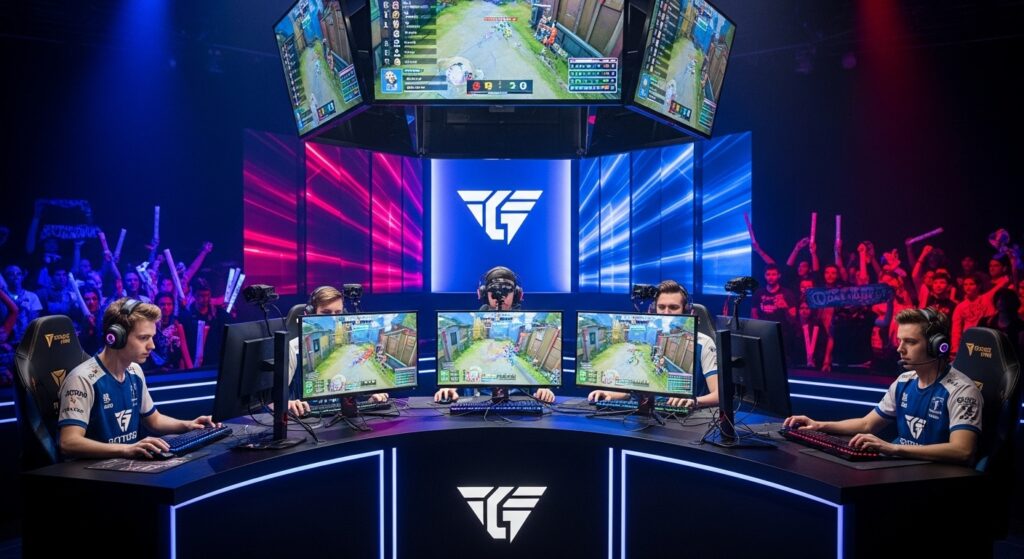
eSports, short for electronic sports, has grown exponentially in recent years, transcending its origins as a niche hobby into a global entertainment phenomenon. With a massive following, lucrative sponsorship deals, and mainstream media coverage, competitive gaming has firmly planted itself as a serious contender in the world of professional sports. As millions of fans tune in to watch tournaments and cheer for their favorite players and teams, eSports is fast becoming an integral part of the entertainment landscape. In this blog post, we will dive into the world of eSports, exploring its rapid growth, its key elements, and why it’s reshaping the future of competitive entertainment.
The Evolution of eSports: From Casual to Competitive
The roots of eSports can be traced back to the 1970s, but it wasn’t until the late 1990s and early 2000s that competitive gaming began to take shape. Early pioneers like StarCraft and Quake provided the framework for multiplayer gaming competitions, often organized by small communities or dedicated fanbases. These tournaments were far from the grand spectacles we see today, but they laid the groundwork for what was to come.
The real turning point for eSports came in the mid-2000s when high-speed internet and online gaming platforms enabled players from around the world to compete in real-time. Games like Warcraft III, Counter-Strike, and League of Legends began to emerge as the central players in competitive gaming. By the time live streaming platforms like Twitch came onto the scene, eSports had found a digital home, allowing players to showcase their skills and fans to watch tournaments live.
It was around this time that the first large-scale eSports tournaments began to gain significant media attention. Global competitions like The International for Dota 2 and the League of Legends World Championship drew in millions of viewers, cementing eSports as a legitimate form of entertainment. Today, eSports is a multibillion-dollar industry, with a global fanbase that rivals traditional sports.
The Popular Genres: A Glimpse into Competitive Gaming
Competitive gaming spans multiple genres, each offering unique experiences for both players and spectators. While there are several types of games that feature prominently in the eSports world, the following genres are considered the cornerstone of the industry.
Multiplayer Online Battle Arenas (MOBAs)
MOBAs like League of Legends and Dota 2 dominate the eSports landscape. These team-based strategy games require players to control individual characters, each with their own unique abilities, and work together to outmaneuver and destroy the opposing team’s base. The focus on teamwork, strategic planning, and individual skill makes MOBAs incredibly engaging to play and watch.
League of Legends, developed by Riot Games, has become one of the most successful eSports titles, boasting a massive fanbase and an annual world championship that attracts millions of viewers. Dota 2 also enjoys a similar level of prominence, with its yearly tournament The International offering some of the largest prize pools in eSports history, often exceeding $30 million.
First-Person Shooters (FPS)
First-person shooters are another major category in eSports, known for their fast-paced action and focus on precision. Games like Counter-Strike: Global Offensive (CS:GO), Overwatch, and Call of Duty are widely popular in the competitive gaming scene. Players in FPS games often compete in teams, and the objective can range from capturing points to planting bombs or simply eliminating the opposing team.
CS:GO has maintained a loyal following for over a decade, with major events like the CS:GO Major Championships attracting top-tier teams and players from around the world. Overwatch also carved out its niche, offering a unique combination of team-based objectives and hero-specific abilities, while Call of Duty continues to be a favorite among FPS fans, thanks to its fast-paced gameplay and competitive events like the Call of Duty League.
Battle Royale
The battle royale genre, which has gained immense popularity in recent years, has brought competitive gaming to a broader audience. Games like Fortnite, PlayerUnknown’s Battlegrounds (PUBG), and Apex Legends have taken the gaming world by storm. In these games, players fight to be the last one standing on a shrinking map, battling opponents while scavenging for weapons and resources.
Fortnite is perhaps the most iconic battle royale title, thanks to its unique blend of building mechanics, fast-paced action, and frequent in-game events. The competitive scene for Fortnite is massive, with high-profile tournaments like the Fortnite World Cup offering huge cash prizes to the winners.
Fighting Games
Fighting games, although often considered a more niche genre within eSports, have a rich history and a dedicated fanbase. Games like Street Fighter, Tekken, and Super Smash Bros. are popular competitive titles in this space. These games are usually one-on-one combat between two players, where mastering combos, timing, and spacing is key to victory.
Tournaments like Evo (Evolution Championship Series) draw huge crowds and millions of viewers, showcasing the world’s best fighting game players. The technical skill required in these games, along with their long-standing competitive traditions, make fighting games a unique and exciting part of the eSports ecosystem.
eSports Athletes: The Professional Gamers
In the world of traditional sports, athletes spend years perfecting their physical and mental skills. The same is true in eSports, where professional gamers dedicate themselves to mastering their games. Professional eSports athletes, like Faker from League of Legends or s1mple from CS:GO, train for countless hours, practicing their mechanics, refining their strategies, and studying the competition.
Unlike traditional sports, eSports players often spend up to 12 hours a day practicing, playing in scrims (practice matches), and reviewing footage to improve their gameplay. The pressure to perform at the highest level is intense, and the career longevity of a professional gamer can be short-lived, with most top players peaking in their early-to-mid twenties.
However, the rewards can be significant. Professional players earn income from tournament prizes, sponsorships, streaming revenue, and endorsements. Teams like Cloud9, Team Liquid, and T1 have become household names in the eSports world, with players achieving celebrity status within the gaming community.
eSports as a Spectator Sport
One of the defining aspects of eSports is its ability to attract large, dedicated audiences. Unlike traditional sports, eSports is not limited by geographical boundaries—thanks to the internet and live-streaming platforms like Twitch and YouTube, fans from all over the world can watch tournaments, follow their favorite teams and players, and engage with the community in real-time.
Major eSports tournaments are broadcasted live, with commentary and analysis, much like traditional sports. Viewers can watch players compete in matches ranging from single-elimination brackets to multi-stage global championships. The excitement of watching high-level competition, paired with the accessibility of online streaming, has made eSports a highly engaging spectator sport.
Tournaments like the League of Legends World Championship and The International have millions of viewers each year, some rivaling the viewership of major traditional sports events. The thrill of competition, the global fanbase, and the interactive nature of live-streaming have all contributed to eSports becoming a mainstream spectator activity.
The Business Side of eSports: Money, Sponsorships, and Investments
The rapid rise of eSports has attracted major investments from both traditional sports organizations and tech companies. Sponsorship deals are a significant revenue stream for eSports organizations, with companies like Intel, Coca-Cola, Red Bull, and Mercedes-Benz backing teams and events. These sponsorships help fund tournaments, support players, and ensure the growth of the industry.
In addition to sponsorships, streaming platforms like Twitch and YouTube have created new revenue models for content creators. Professional eSports players can monetize their streams through advertisements, paid subscriptions, and donations, generating income even outside of tournaments. Teams and event organizers also benefit from media rights deals, where eSports events are broadcast on television or other digital platforms.
Venture capitalists have taken notice of the potential in eSports, and they are investing heavily in teams, events, and infrastructure. This investment has helped propel eSports into a billion-dollar industry, with projections indicating continued growth in the coming years.
The Future of eSports: A Global Phenomenon
The future of eSports looks promising, with even greater growth expected in the coming years. As technology improves, games will become more immersive, and new forms of competition will emerge, such as virtual reality (VR) and augmented reality (AR). This could create even more engaging and interactive experiences for both players and spectators.
Additionally, eSports is increasingly being recognized as a legitimate career path, with more universities offering scholarships for competitive gaming and even degrees in eSports management. The growth of professional eSports leagues and international tournaments suggests that eSports could eventually be included in global events like the Olympics.
The continued expansion of the global eSports audience, combined with advancements in technology and increasing media coverage, ensures that eSports will only continue to grow as both a form of entertainment and a business.
Conclusion: eSports as the Future of Entertainment
eSports has evolved from a niche hobby into a multi-billion-dollar industry that attracts millions of fans, players, and sponsors worldwide. Its blend of competitive gaming, entertainment, and community engagement has made it one of the most exciting and rapidly growing sectors in the entertainment world.
As eSports continues to evolve, it will become an even more integral part of global culture, blurring the lines between traditional sports and digital competition. Whether you’re a gamer, a fan, or an investor, eSports offers endless possibilities