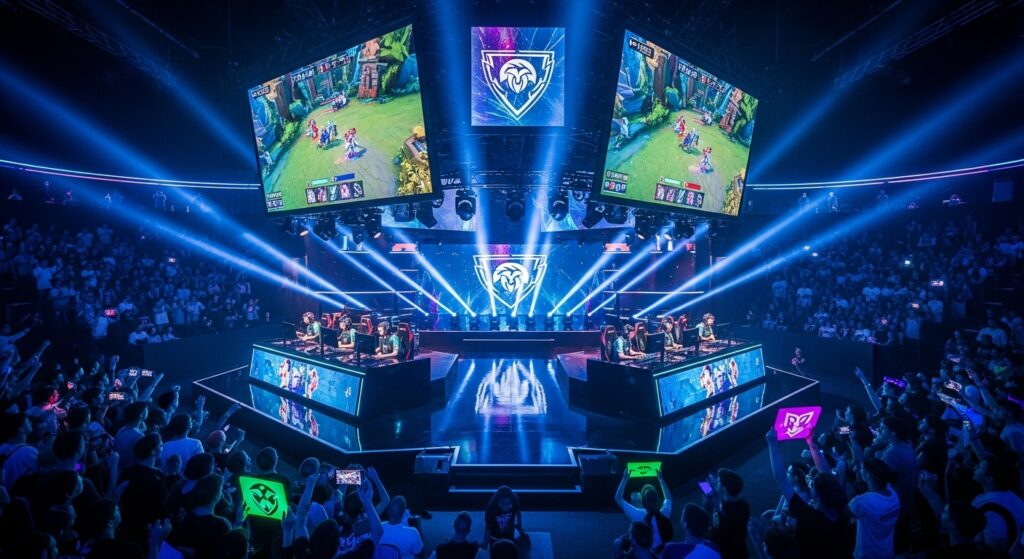
Introduction: The Rise of a Digital Revolution
In the past few decades, video gaming has transformed from a casual pastime into a competitive, organized, and multi-billion-dollar industry known as esports. What began as small-scale gaming tournaments among friends has now become a global spectacle filling massive arenas, streamed to millions of viewers worldwide, and supported by corporate sponsorships that rival traditional sports. Esports has not only changed how we perceive entertainment but has also reshaped the cultural, economic, and technological landscapes of modern society.
The journey of esports is a fascinating story of innovation, passion, and digital evolution. This blog explores how competitive gaming emerged, the factors that fueled its explosive growth, the communities that sustain it, and its long-term impact on global culture.
The Origins of Esports: From Arcades to the Internet Age
The roots of esports can be traced back to the early days of arcade gaming in the 1970s and 1980s. Back then, games like Space Invaders, Pac-Man, and Donkey Kong dominated arcades, and players competed to achieve the highest scores on local machines. The first official video game competition is often cited as the Space Invaders Championship in 1980, organized by Atari. This event drew thousands of participants and marked the beginning of competitive gaming as a public event.
The 1990s saw the rise of home consoles and personal computers, which allowed more people to access games and connect through local area networks (LANs). Titles such as Doom, Quake, and StarCraft became household names in competitive circles. LAN parties became a cultural phenomenon, bringing players together for in-person matches that tested skill and strategy. These gatherings laid the foundation for organized tournaments, team-based gameplay, and the professionalization of gaming.
The 2000s: The Dawn of Professional Gaming
The early 2000s were a turning point for esports. Internet connectivity improved, and online multiplayer gaming became mainstream. This period saw the birth of professional gaming leagues and organizations that treated esports as a legitimate career path rather than a hobby.
Games like Counter-Strike, Warcraft III, and Halo gained immense popularity among competitive players. The World Cyber Games (WCG) and Electronic Sports World Cup (ESWC) became global events, uniting players from different countries under one banner of digital competition. South Korea, in particular, emerged as a global leader in esports during this era, thanks to the rise of StarCraft and a culture that embraced gaming as a respected sport. Korean broadcasters even began airing esports matches on national television, setting a precedent for the rest of the world.
Professional teams, coaches, and sponsors began to emerge, mirroring the structure of traditional sports organizations. Players were no longer just enthusiasts; they were athletes dedicating countless hours to mastering complex mechanics, strategies, and team coordination.
The Streaming Revolution: Accessibility and Community
The introduction of live-streaming platforms in the 2010s fundamentally changed the esports landscape. Platforms such as Twitch and YouTube Gaming allowed players to broadcast their gameplay to audiences around the world in real time. Suddenly, esports was not just about the competition—it became about community, entertainment, and engagement.
Fans could now interact directly with their favorite players, learn from their strategies, and feel like part of a shared experience. This democratization of viewership allowed esports to expand beyond professional tournaments and into the everyday lives of gamers. Streamers and content creators became influential figures, blending entertainment with competition. The barrier between professionals and fans grew thinner, leading to a more connected ecosystem.
Streaming also gave rise to massive online tournaments that anyone could join, regardless of location. This accessibility played a vital role in the exponential growth of esports and its audience base, particularly among younger generations.
Major Titles That Defined Esports
Certain games have played a defining role in shaping the esports scene. Each genre brings unique dynamics and audiences, contributing to the industry’s diversity.
1. League of Legends
Developed by Riot Games, League of Legends (LoL) is one of the most influential esports titles of all time. With its intricate gameplay, strategic depth, and consistent updates, LoL has built a massive global following. The annual League of Legends World Championship fills stadiums and draws tens of millions of online viewers.
2. Counter-Strike: Global Offensive
Few games have had the longevity and consistency of Counter-Strike. Its tactical gameplay, teamwork, and precision shooting have kept it relevant for over two decades. Major tournaments like the CS:GO Majors attract international teams and millions in prize money.
3. Dota 2
Valve’s Dota 2 revolutionized esports with its annual The International tournament, offering record-breaking prize pools funded by its player community. The game’s complexity and teamwork requirements have made it a symbol of high-level competitive gaming.
4. Fortnite
When Fortnite launched, it changed the perception of what an esports title could be. Its mix of creativity, building mechanics, and fast-paced gameplay attracted a massive youth audience. Epic Games’ million-dollar tournaments turned casual gamers into global stars.
5. Overwatch and Valorant
Team-based shooters like Overwatch and Valorant brought new styles of play and strategic diversity. With vibrant characters and abilities, they blended tactical gameplay with personality-driven storytelling.
The Business of Esports: From Passion to Profit
Esports is no longer just a hobby—it’s a global industry. According to recent estimates, the esports market generates billions in revenue each year through sponsorships, advertising, merchandise, and media rights. Major brands like Coca-Cola, Intel, and Nike have partnered with esports organizations to tap into the growing youth demographic.
Franchise leagues such as the Overwatch League and League of Legends Championship Series introduced city-based teams, similar to traditional sports franchises. These organizations sign players, build dedicated training facilities, and attract loyal fan bases. Prize pools for major tournaments can exceed tens of millions of dollars, making esports one of the most lucrative entertainment sectors.
Beyond sponsorships, esports has also created opportunities for careers in broadcasting, event management, content creation, and game development. Universities now offer esports scholarships, and governments in several countries recognize professional gamers as athletes.
The Cultural Impact of Esports
Esports has become a cultural movement that extends far beyond gaming. It has reshaped how people connect, communicate, and find identity in digital spaces.
1. Community and Belonging
For millions of players, esports provides a sense of community and belonging. Online gaming communities transcend geographical boundaries, allowing people from different cultures and languages to share a common passion. Esports events, both physical and virtual, foster unity and excitement comparable to the Olympics or the World Cup.
2. Breaking Stereotypes
Gaming was once dismissed as a solitary or unproductive activity. Esports has shattered that stereotype by showcasing the discipline, teamwork, and mental agility required to compete at a professional level. It highlights the cognitive and reflexive skills that rival those of traditional athletes.
3. A Global Language
Esports transcends linguistic and cultural barriers. Whether it’s a Korean StarCraft player, a European CS:GO team, or a North American Fortnite champion, the spirit of competition remains universal. The global nature of esports reflects how technology can bridge divides and create a shared cultural space.
Challenges Facing the Esports Industry
Despite its rapid growth, esports is not without challenges. As the industry matures, it faces issues that must be addressed for sustainable progress.
1. Player Burnout
Professional gamers often train for long hours daily, which can lead to physical and mental exhaustion. Unlike traditional sports, where physical training is balanced with rest and recovery, the intense screen time in esports poses unique health challenges.
2. Financial Stability
While top-tier players earn lucrative salaries, many aspiring professionals struggle to find financial stability. Unequal prize distribution and inconsistent tournament structures make it difficult for smaller teams and lesser-known players to thrive.
3. Cheating and Integrity
The digital nature of esports makes it vulnerable to cheating, match-fixing, and software manipulation. Maintaining fair play requires constant vigilance, robust anti-cheat systems, and strong regulatory frameworks.
4. Representation and Diversity
Although the esports community is global, representation issues persist. Women and minorities are often underrepresented or face discrimination in competitive gaming environments. Inclusive policies and visibility initiatives are essential to ensuring equal opportunities.
5. Sustainability and Overcommercialization
As corporations pour money into esports, there is growing concern about overcommercialization. Some fear that excessive focus on profit may overshadow the community-driven spirit that originally fueled the industry.
Esports and Education: Bridging the Gap Between Gaming and Learning
Educational institutions worldwide are beginning to recognize the value of esports beyond entertainment. Universities now offer dedicated programs in esports management, game design, and marketing. High schools have introduced esports teams as part of their extracurricular offerings, teaching students teamwork, communication, and strategic thinking.
Esports also serves as a gateway to STEM (Science, Technology, Engineering, and Mathematics) learning. Games often require an understanding of data analysis, probability, and even psychology. Through gaming, students develop digital literacy skills that are increasingly relevant in today’s tech-driven world.
The Psychology of Competitive Gaming
Esports is not only a test of technical skill but also of mental resilience. The psychological demands of competitive gaming mirror those of traditional athletes. Players must manage stress, maintain focus under pressure, and adapt quickly to evolving situations.
Sports psychologists now work with professional teams to develop mental training programs that enhance performance and prevent burnout. Visualization, meditation, and cognitive-behavioral techniques have become part of the modern esports athlete’s toolkit. The emphasis on mental health and balance represents a maturing industry that values player well-being as much as skill.
The Role of Technology in Esports Growth
Advancements in technology have been central to esports’ success. High-speed internet, powerful gaming hardware, and sophisticated broadcasting tools enable seamless global competition and viewing experiences. Virtual reality (VR) and augmented reality (AR) are pushing the boundaries further, offering immersive spectator experiences.
Artificial intelligence and data analytics are also being used to study gameplay, identify weaknesses, and refine strategies. Teams use performance-tracking tools to monitor reaction times, accuracy, and decision-making patterns. These innovations make esports one of the most technologically advanced forms of competition in existence.
The Future of Esports: Beyond the Screen
Looking ahead, esports is poised for even greater expansion. The integration of virtual and augmented reality will redefine how players and spectators engage with the medium. New genres and hybrid experiences will continue to blur the lines between gaming, sports, and entertainment.
With the inclusion of esports in international sporting events and even discussions about Olympic recognition, its legitimacy as a competitive discipline is undeniable. As the industry evolves, we can expect more investment in player welfare, diversity initiatives, and grassroots development.
Esports also has the potential to become a powerful educational and social tool. It fosters collaboration, critical thinking, and global communication—skills essential for the 21st century. The boundaries between player, fan, and creator will continue to dissolve, giving rise to a fully participatory digital culture.
Conclusion: The Power of Play in a Connected World
Esports represents the culmination of decades of technological advancement, creative expression, and human ambition. It stands at the intersection of art, science, and sport—a digital stage where millions unite to celebrate skill, teamwork, and innovation.
From humble arcade beginnings to massive international tournaments, esports has proven that play is not just recreation—it’s a universal language of competition, creativity, and connection. In a world increasingly defined by screens and networks, esports is more than entertainment; it is a symbol of how digital culture can unite people, inspire excellence, and redefine what it means to be an athlete in the modern age.