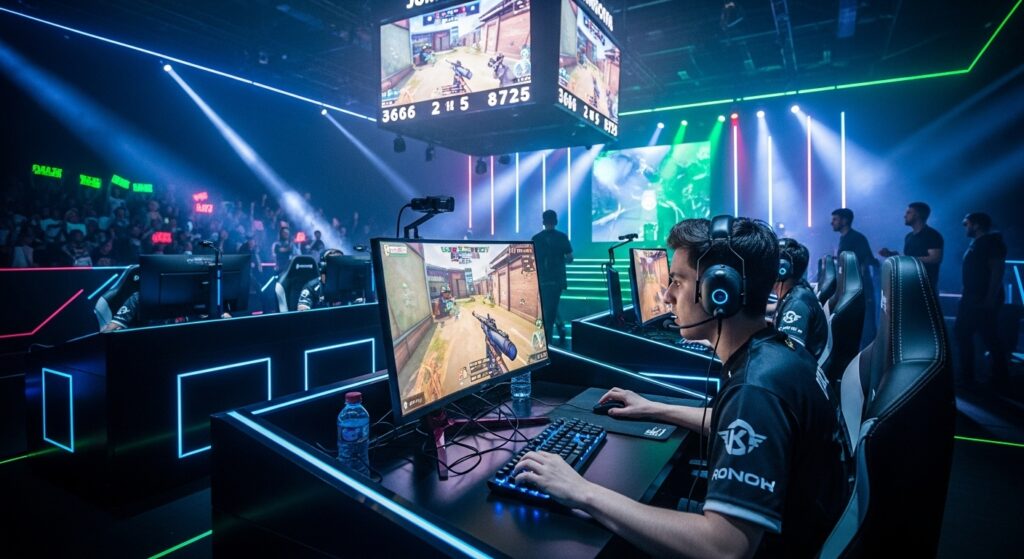
Esports, short for electronic sports, has evolved from a niche hobby into a global phenomenon that captures the attention of millions of fans worldwide. What was once a small community of gamers competing in arcades and LAN tournaments has transformed into a multi-billion-dollar industry with professional teams, sponsorships, and international competitions. The growth of esports highlights not only the increasing popularity of gaming but also the way technology and digital culture have shaped modern entertainment.
A Brief History of Esports
The origins of esports can be traced back to the late 1970s and early 1980s with the advent of video game competitions. Early gaming tournaments, such as the Space Invaders Championship in 1980, attracted thousands of participants and showcased the competitive potential of gaming. Throughout the 1990s, the rise of personal computers and online gaming created new opportunities for competitive play, with titles like StarCraft and Quake forming the backbone of early esports leagues.
The 2000s marked a significant turning point. Games such as Counter-Strike, Warcraft III, and later League of Legends, began to dominate the esports scene, attracting large audiences and organized teams. Platforms like Twitch and YouTube Gaming later revolutionized how fans consumed esports content, allowing them to watch live matches, follow their favorite players, and engage in online communities.
The Modern Esports Ecosystem
Today, the esports ecosystem is highly complex, involving players, teams, sponsors, streaming platforms, tournament organizers, and fans. Professional players dedicate countless hours to training, strategy, and teamwork. Unlike casual gamers, they often treat their practice schedules similarly to traditional athletes, focusing on mechanics, communication, and mental resilience.
Teams have evolved into structured organizations with coaches, analysts, nutritionists, and managers. Sponsors, ranging from technology companies to energy drink brands, have recognized the marketing potential of esports. Streaming platforms provide an avenue for fans to engage with both professional and amateur players, creating a continuous cycle of content and interaction that fuels the industry’s growth.
Popular Esports Titles and Genres
Esports encompasses a wide range of game genres, each attracting unique communities and competitive structures. Multiplayer Online Battle Arena (MOBA) games, like League of Legends and Dota 2, are some of the most popular, offering intricate strategies, team coordination, and fast-paced gameplay. First-Person Shooter (FPS) games, such as Counter-Strike: Global Offensive and Call of Duty, emphasize precision, reflexes, and map control.
Real-Time Strategy (RTS) games and Fighting Games, including StarCraft II and Street Fighter, cater to audiences that enjoy tactical depth and individual skill. Sports simulation games, like FIFA and NBA 2K, bridge the gap between traditional sports and esports, attracting fans who enjoy competitive simulation. Each genre offers distinct challenges and skill requirements, highlighting the diversity of esports as a competitive field.
The Economics of Esports
The financial landscape of esports has grown exponentially. Prize pools for major tournaments can reach millions of dollars, particularly in games like Dota 2, whose The International tournament regularly features record-breaking prize money. Beyond tournament winnings, players and teams generate income through sponsorship deals, streaming revenue, merchandise sales, and endorsements.
Esports organizations function much like traditional sports franchises, managing contracts, branding, and fan engagement. The industry also benefits from corporate partnerships, with companies investing in tournaments, media coverage, and esports facilities. This influx of capital has helped professionalize esports, making it a viable career path for skilled players and content creators.
The Role of Streaming in Esports Growth
Streaming platforms have played a crucial role in the expansion of esports. Services like Twitch, YouTube Gaming, and Facebook Gaming have provided gamers with the ability to broadcast live content to a global audience. Viewers can watch competitive matches, tutorials, and casual streams, creating a sense of community and connection with the gaming world.
Live streaming has also allowed esports fans to engage with players in real time, fostering interaction through chat, donations, and subscriptions. The accessibility of streaming has democratized esports, enabling amateur players to gain exposure and potentially break into the professional scene. Furthermore, streaming has contributed to the mainstream acceptance of esports, highlighting its entertainment value beyond the gaming community.
Esports as a Career
Professional esports players often start their careers at a young age, dedicating years to honing their skills and building a reputation in the gaming community. Successful players must balance mechanical skill, strategic thinking, and teamwork, while maintaining physical and mental health. Many teams employ coaches, analysts, and psychologists to ensure players perform at their best.
The career of an esports player can be rewarding but also demanding. The competitive environment is intense, with high expectations and constant pressure to perform. Longevity in esports can be shorter than in traditional sports due to the physical and mental demands, making early success and careful planning crucial. Despite these challenges, esports offers opportunities for fame, financial stability, and personal fulfillment.
The Social Impact of Esports
Esports has transformed the way people connect and interact globally. Online tournaments, streaming platforms, and social media enable fans to form communities based on shared interests, regardless of geographic location. Esports also promotes teamwork, communication, and problem-solving skills, which can translate to real-life applications.
Moreover, esports has challenged traditional perceptions of sports and competition. While skeptics once dismissed gaming as a pastime, esports now enjoys recognition from educational institutions, governments, and media outlets. Some universities even offer scholarships for esports athletes, legitimizing it as a competitive and academic pursuit.
Esports and Technology
Technology plays an essential role in shaping esports. High-performance computers, gaming peripherals, and internet infrastructure enable smooth gameplay and precise control. Advanced analytics and data-driven strategies allow teams to optimize performance, study opponents, and make informed in-game decisions.
Virtual reality (VR) and augmented reality (AR) are also beginning to influence esports. These technologies could create immersive competitive experiences and expand the possibilities of game design and spectator engagement. Artificial intelligence (AI) tools assist in training, game analysis, and even commentary, further integrating technology into the competitive landscape.
Challenges Facing the Esports Industry
Despite its rapid growth, esports faces several challenges. Player burnout is a significant issue due to long practice hours, travel demands, and high-pressure environments. Mental health concerns, including anxiety and depression, are prevalent, prompting teams and organizations to prioritize wellness initiatives.
Regulatory concerns also pose challenges. Issues such as cheating, match-fixing, and fair play regulations require oversight and enforcement. Additionally, diversity and inclusivity remain ongoing discussions, as the industry strives to create a welcoming environment for players and fans of all backgrounds.
The Future of Esports
The future of esports appears promising. As technology continues to advance, new gaming experiences, competitive formats, and immersive spectator options will emerge. The globalization of esports will likely expand, with more regions developing professional leagues, tournaments, and infrastructure to support the industry.
Esports is also expected to intersect more with traditional sports, entertainment, and education. Collaborations between gaming companies, media outlets, and sports organizations could create hybrid experiences that appeal to wider audiences. As mainstream acceptance grows, esports has the potential to redefine competition, entertainment, and digital culture in the 21st century.
Conclusion
Esports has grown from humble beginnings to become a major cultural and economic force. Its evolution has been driven by passionate players, dedicated teams, innovative technology, and engaged fans. The industry offers unique opportunities for competition, entertainment, and personal development while challenging traditional notions of sports and gaming.
As esports continues to expand, it promises to shape the future of entertainment, technology, and global connection. Whether through competitive play, streaming, or community engagement, esports has proven itself as a legitimate and influential domain, leaving an indelible mark on the world of modern gaming.